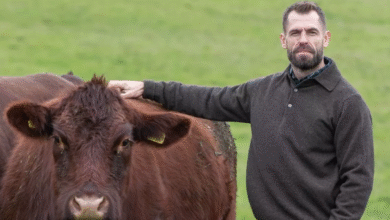
Kelvin Fletcher Accused of Farming for Fame – Is He Exploiting Britain’s Agricultural Struggles?
Farming in the Spotlight — Does Kelvin Fletcher’s Success Reflect the Reality Facing British Agriculture?

As British farming faces one of its most uncertain chapters in recent memory, the growing profile of celebrity-led rural ventures has sparked an increasingly complex debate. At the center of that discussion is Kelvin Fletcher — actor turned farmer — whose highly visible projects at Fletchers’ Family Farm have made him a familiar face of countryside life on national television.
But as Fletcher’s farm expands beyond traditional agriculture into hospitality, retail, and now weddings, questions are emerging about what his success truly represents — and whether it mirrors the experience of most farmers across the UK.
The wider agricultural context is stark. Rising production costs, unpredictable weather patterns, shifting subsidy structures, and post-Brexit trade pressures have placed enormous strain on family farms. Many are reducing operations or leaving the sector altogether, while rural communities report growing financial and emotional stress.
Against this backdrop, Fletchers’ Family Farm appears to be moving in the opposite direction — diversifying rapidly and building a multifaceted rural business that includes television production, visitor attractions, food and drink outlets, and curated events.
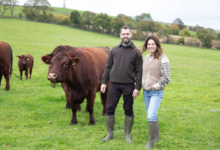
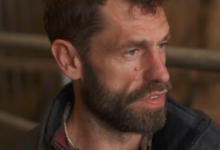
Supporters see this as adaptability in action: a modern example of how farms can survive by evolving. Critics, however, argue that Fletcher’s model may be difficult to replicate — and potentially misleading as a benchmark for farming resilience.
“Diversification is often presented as the solution,” said one rural commentator. “But most farmers don’t have the visibility, resources, or media access to turn diversification into a brand.”
Fletcher’s journey has been shaped by national exposure. His transition from acting to farming has been documented on ITV, drawing audiences invested not only in agriculture, but in his personal story. That attention brings opportunities unavailable to the vast majority of farmers — opportunities that transform a farm into a destination, rather than solely a production site.

This distinction has become more pronounced with the farm’s move into hosting weddings and countryside experiences. Marketed with language emphasizing charm, escape, and atmosphere, these ventures reflect a broader trend in rural business — one where land increasingly supports experiences rather than output.
Some within the farming community worry that this shift subtly reframes public understanding of agriculture.
“There’s a risk that farming becomes something people visit, not something that feeds them,” one agricultural advocate explained. “That changes how society values it.”
Television portrayal adds another layer. While farming programmes offer visibility and appreciation for rural life, critics note that broadcast storytelling often simplifies the realities of the profession. Long-term financial uncertainty, failed harvests, mounting debt, and emotional tolls are rarely front and center.
As a result, some argue that audiences are presented with a version of farming that feels achievable — even optimistic — at a time when many in the industry feel anything but.
This contrast has implications beyond perception. Analysts suggest that when farming appears successful through high-profile examples, it may reduce urgency around policy reform. Structural issues — such as fair pricing, supply chain imbalance, and mental health support — risk being overshadowed by narratives of individual success.
“It’s not that these ventures are wrong,” said one rural policy observer. “It’s that they don’t tell the whole story.”
Fletcher himself has positioned his work as a celebration of countryside values, and supporters argue that visibility helps reconnect the public with rural Britain. They point out that any farm maintaining financial stability contributes positively to local economies and keeps land in use.
---2024-11-16t003502.772-min.jpg?sfvrsn=40773c87_1)
Yet the discomfort remains for some farmers watching from the sidelines — particularly those without alternative income streams or media platforms.
What concerns critics most is not Fletcher’s success, but what it may come to symbolize: a future where farming viability is tied to entertainment, branding, and experience-driven revenue rather than food production alone.
As traditional farms struggle quietly, celebrity-backed rural businesses increasingly shape public imagination. They become reference points for what farming looks like — and what it takes to survive.
Whether this shift helps or harms the agricultural sector is still unclear. What is certain is that it raises difficult questions about representation, access, and sustainability.
Is high-profile diversification a roadmap for survival — or an exception mistaken for the rule?
Does visibility strengthen farming’s voice — or soften its reality?
And as Britain’s agricultural foundations continue to face pressure, one question grows more pressing than ever:
If farming’s future depends on fame, hospitality, and storytelling, what happens to those who farm without an audience?
For now, Kelvin Fletcher’s journey stands as both inspiration and provocation — a symbol of what is possible, and a reminder of how far that possibility may be from the everyday experience of Britain’s farming community.