FLETCHER’S DESPERATE PIVOT: Family Abandons Farming Dream to Launch New Business — Is This Their Last Chance at Survival?
From Farming to Business: Can the Fletcher Family Survive by Reinventing Themselves?
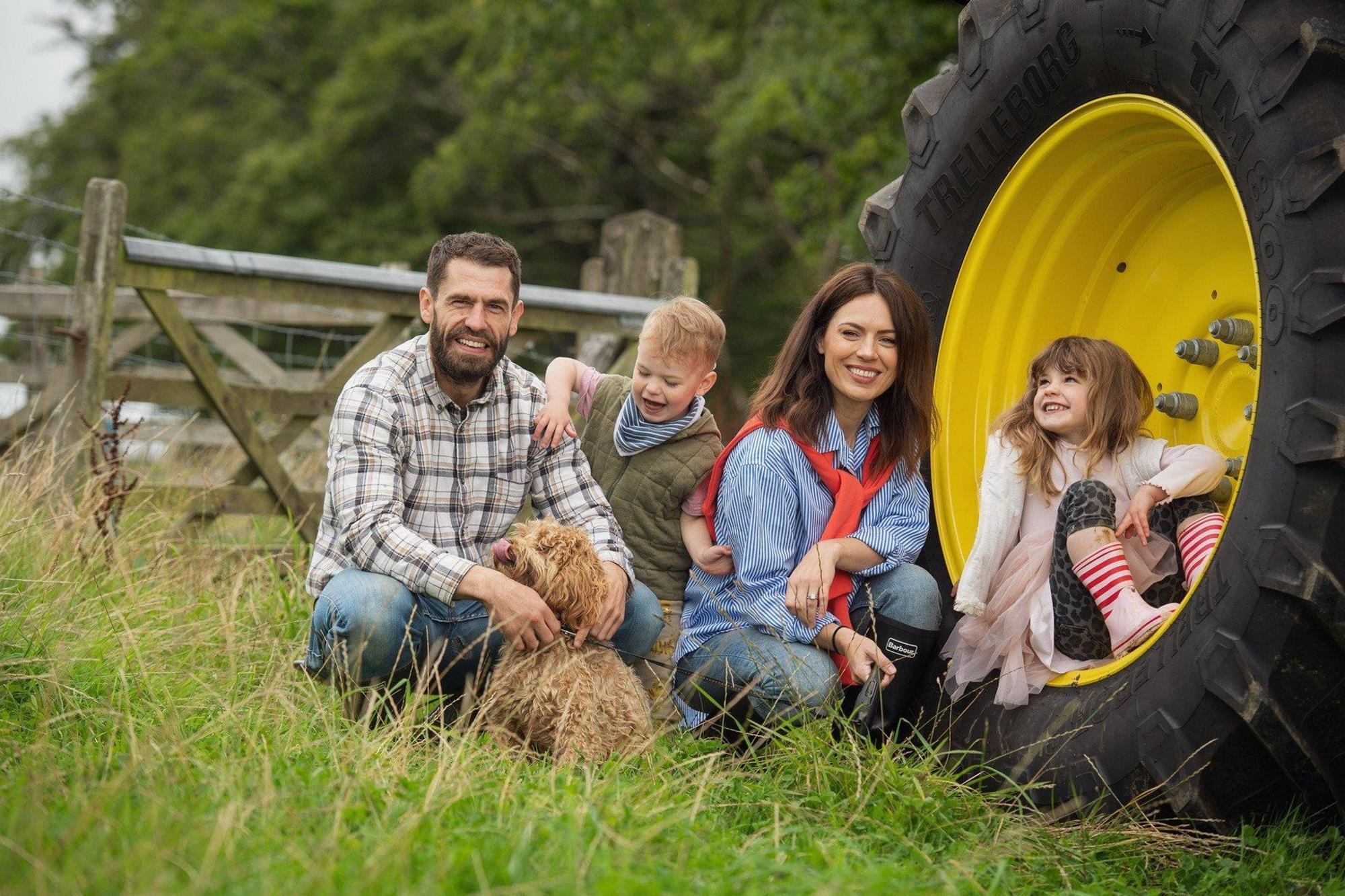
The transformation of a traditional farm into a modern, multi-layered business is no longer a bold experiment—it is quickly becoming a necessity, and the journey of Kelvin Fletcher and his family offers a vivid illustration of that shift. Through Fletcher’s Family Farm, viewers are witnessing not just the daily routines of rural life, but a deeper, more strategic reinvention unfolding in real time. Faced with mounting financial pressures and the unpredictability of agriculture, the Fletchers are actively redefining what their farm represents, moving beyond production into experience, branding, and direct-to-consumer engagement.
At the center of this transformation is a deliberate effort to extract more value from what the farm already produces. Rather than selling raw wool at a loss, the family is investing in the creation of finished products such as blankets, aiming to build a recognizable identity around quality and authenticity. This shift reflects a broader trend across the farming world, where survival increasingly depends on controlling more of the supply chain. By turning raw materials into marketable goods, farmers can potentially escape the volatility of commodity pricing—but doing so requires not just resources, but a completely different mindset.
Beyond products, the Fletcher family is also embracing the idea of the farm as a destination. Plans to host large-scale events, including an ambitious six-day Christmas celebration, signal a move toward experiential farming—where visitors are not just customers, but participants in a curated rural lifestyle. These events represent a critical opportunity to generate significant income within a short period, particularly during seasonal peaks when public interest is at its highest. However, they also introduce a new level of complexity, from logistics and staffing to marketing and customer experience, turning the farm into something that increasingly resembles an event-driven enterprise.
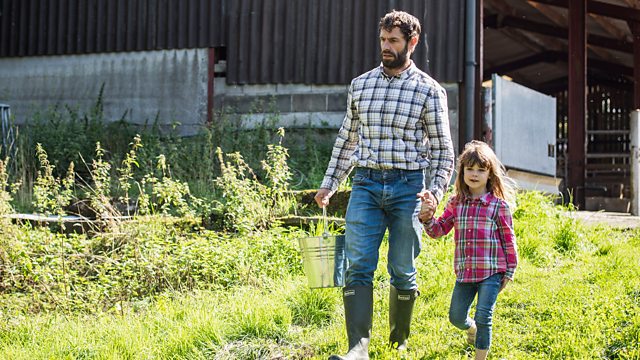
Yet, even as these plans take shape, the realities of farm life continue to intrude in unpredictable ways. Scenes of sheep going missing in thick fog or the relentless accumulation of daily tasks serve as reminders that no amount of business strategy can fully control the natural environment. Farming remains inherently uncertain, and the more the Fletchers expand their operations, the more they must juggle competing priorities. The pressure is not only physical but psychological, as they attempt to maintain both financial stability and the public image that now forms part of their livelihood.
That public image, in fact, has become one of their most valuable—and demanding—assets. By sharing their story through television and media, the Fletcher family has created a connection with audiences that extends beyond the farm itself. This visibility attracts visitors and customers, but it also raises expectations. Every success, every setback, becomes part of a narrative that must be managed as carefully as any business operation. The line between authenticity and performance can become blurred, adding another layer of tension to an already complex situation.
Amid these pressures, moments of ordinary life take on a heightened significance. The simple joy of their dog Ginger giving birth, for instance, offers a brief but meaningful contrast to the constant demands of work and planning. These quieter scenes highlight what is at stake—not just a business, but a way of life that is deeply personal and emotionally grounded. They serve as a reminder that, despite the increasing commercialization of the farm, its core remains rooted in the rhythms of nature and family.

The question that emerges from all of this is both simple and profound: are the Fletchers building something new, or are they fighting to preserve what already exists? In many ways, the answer is both. Their efforts to diversify and innovate are clearly aimed at securing the farm’s future, yet those same efforts risk transforming it into something fundamentally different from what it once was. This tension lies at the heart of modern farming, where adaptation is essential, but change can come at a cost.
More broadly, the Fletcher family’s experience reflects a shift that is reshaping agriculture as a whole. Traditional models, reliant solely on production, are becoming increasingly unsustainable in the face of economic and environmental pressures. In their place, hybrid models are emerging—blending farming with tourism, retail, and media. These models offer new opportunities, but they also demand new skills and introduce new risks, requiring farmers to become entrepreneurs, marketers, and storytellers all at once.
Ultimately, whether the Fletcher family can survive this transformation will depend on their ability to balance these competing demands. Reinvention may be the only path forward, but it is not a guaranteed solution. It requires resilience, creativity, and a willingness to embrace uncertainty—qualities that farming has always demanded, but now in entirely new ways.
As their story continues to unfold, one thing is certain: the farm is no longer just a place where crops are grown and animals are raised. It is a living, evolving enterprise, shaped as much by market forces and public perception as by the land itself. And in that evolution lies both the promise of survival and the risk of losing something that cannot easily be replaced.