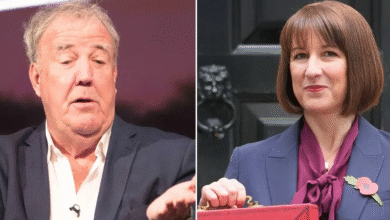
Jeremy Clarkson Warns New Inheritance Tax Changes Could Destroy British Farming – Is Diddly Squat at Risk Too?
Jeremy Clarkson Warns New Inheritance Tax Changes Could Destroy British Farming – Is Diddly Squat at Risk Too?
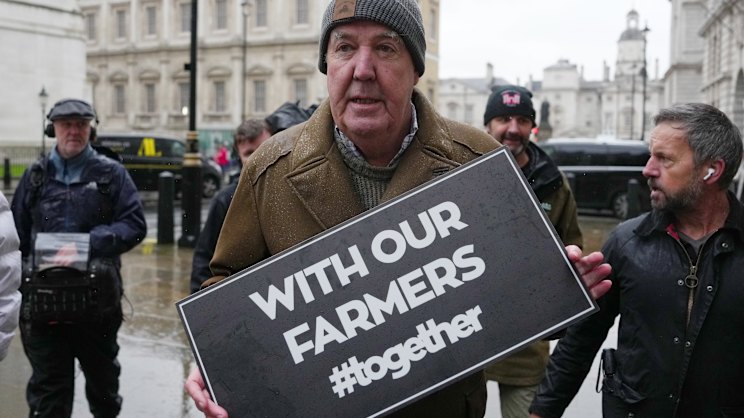
Jeremy Clarkson has reignited his criticism of the government’s planned inheritance tax reforms, warning that the changes could still force many family farms to break apart—even after ministers increased the threshold. In his latest Sunday Times column, Clarkson argues that treating farms like ordinary assets ignores how farming actually works, and risks damaging British food production in the long run.
The new rules are expected to come into effect from April 2026, and Clarkson claims the adjustment made by Chancellor Rachel Reeves doesn’t solve the core problem. While the threshold was reportedly raised from £1 million to £2.5 million, Clarkson insists a significant number of farmers will still face inheritance tax bills they simply cannot afford. He argues that even if the government reduced the number of farms affected, the reform still threatens the survival of many “medium-sized” family operations.
Clarkson’s central point is that farming inheritance cannot be compared to inheriting a normal house or a standard investment. He says a house can be sold and immediately used by someone else because living in a home doesn’t require specialist knowledge. A farm, however, depends on generations of practical experience—understanding the land, the seasons, the soil, and the fine details that can’t be learned overnight. In his view, selling a farm to cover inheritance tax doesn’t just transfer ownership; it destroys the knowledge and continuity that keeps the business alive.

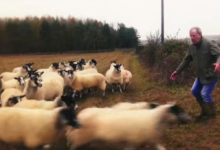
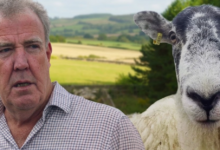
He warns that when an inheritance tax bill arrives, many families will have no choice but to sell off land to raise cash. But that solution, Clarkson argues, often creates a fatal chain reaction. Once land is sold, the farm may lose the scale needed to function profitably, making it “completely unviable.” In other words, the tax doesn’t simply collect revenue—it can permanently shrink farms until they can no longer survive.
To support his argument, Clarkson points to his own experience running Diddly Squat Farm in Oxfordshire. Despite owning around 405 hectares (1,000 acres) of arable land, he claims the farm still struggles to make money. Clarkson says that even at this size, the business barely breaks even, and selling a large portion of land to pay inheritance tax would push it into loss. His message is clear: if a farm of that scale can’t generate spare profit, smaller family farms will be even less able to absorb the financial shock.
Beyond individual businesses, Clarkson raises a wider national concern—food security. He argues that breaking up family farms means Britain risks losing the “encyclopaedic” knowledge passed down through generations, such as what crops grow best in specific fields and how to manage land sustainably. If farms become fragmented, he warns domestic food production could drop, making the UK more dependent on imports and more vulnerable during future global disruptions.

Clarkson also frames the issue as cultural and environmental, suggesting the policy could “ruin everything that makes Britain beautiful.” In his view, family farms are not just businesses but part of the countryside’s identity, shaping landscapes, rural communities, and the country’s ability to feed itself.
The government, however, continues to defend the reform as fair. Ministers argue it will mainly affect a minority of farms and could raise around £300 million a year. Farming groups strongly disagree, warning the policy could undermine farm viability, harm rural economies, and weaken the UK’s long-term farming capacity.
With the April 2026 deadline approaching, Clarkson’s comments reflect a growing fear in the farming world: even if the rules change on paper, the financial reality on the ground could still force families to sell land, split farms, and walk away from a way of life that depends on stability across generations.