Jeremy Clarkson Fires Back at Rachel Reeves ‘Bullying’ Claims After Budget Backlash – What Did He Really Say?
Jeremy Clarkson Delivers Cutting Response as Rachel Reeves Faces Accusations of Media “Bullying” Amid Ongoing Budget Row

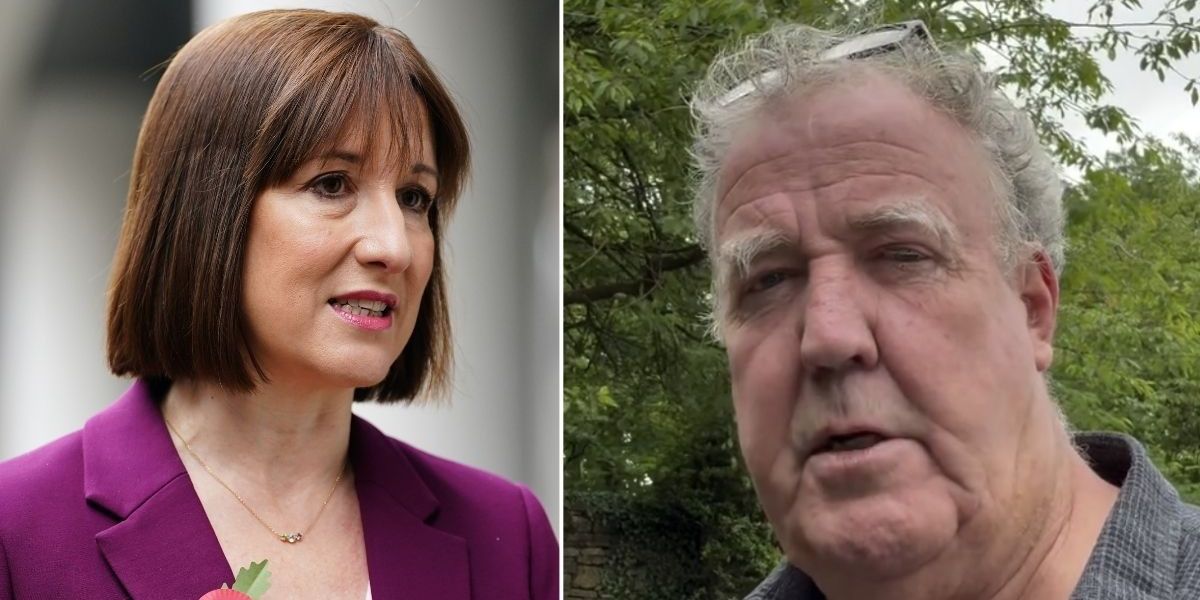
Jeremy Clarkson has issued a characteristically blunt response to claims that Labour Chancellor Rachel Reeves has been subjected to “bullying” by political opponents and members of the media in the heated aftermath of last month’s Budget announcement. The broadcaster and Clarkson’s Farm star entered the political fray after commentator Narinder Kaur argued that Reeves was being treated with undue hostility, prompting a one-word retort from Clarkson that has since sparked widespread reaction online.
The row around Reeves has been intensifying for weeks, with Labour officials and supporters claiming that scrutiny of the Chancellor has at times veered into personal attacks rather than legitimate political questioning. Much of the controversy stems from a public confrontation between Reeves and Conservative leader Kemi Badenoch, who accused the Chancellor of misleading the public regarding the scale of the fiscal “repair job” she faced and of raising taxes to fund welfare spending.
Speaking on Sunday with Laura Kuenssberg, Badenoch argued that Reeves had “resigned herself to taxing working people” and had failed to be transparent about fiscal headroom. “The only thing that was unfunded was the welfare payments which she has made,” Badenoch said. “And she’s doing it on the backs of people who are working very hard and getting poorer.”
Badenoch also revealed that shadow chancellor Mel Stride had contacted the Financial Conduct Authority to seek an inquiry into Reeves’ alleged failure to disclose key Budget details. She further suggested that the Chancellor had intentionally painted a bleak economic picture ahead of the Budget to soften public reaction when the full tax rises were eventually unveiled.


The combative exchange carried over into the House of Commons, where Badenoch branded Reeves “spineless, shameless and completely aimless,” prompting visible discomfort from the Chancellor. Badenoch also questioned whether Labour leader Sir Keir Starmer was “mansplaining” to Reeves during the front-bench debate — comments Reeves later admitted she found distasteful.
“I don’t like that sort of stuff,” Reeves said when discussing the confrontation. “I try to concentrate on policies rather than personalities.”
Despite criticism from Labour MPs and a number of political commentators, Badenoch stood by her remarks, insisting she had not crossed a line and had simply been forceful in holding the Chancellor to account. The Conservative leader has faced accusations of being overly aggressive, but she dismissed such claims as political theatre.
However, Badenoch is not the only figure accused of pressing Reeves too hard. Over the weekend, Reeves faced pointed questioning from Sky News presenter Trevor Phillips, who grilled her repeatedly over allegations that she had misled the public ahead of the Budget. His stern tone led some viewers to come to Reeves’ defence — including commentator Narinder Kaur, who described the interaction as demeaning.
Posting on X, Kaur wrote: “I understand that we need to know if Rachel Reeves lied… but the manner in which Trevor Phillips and now ##bbclaurak are talking to Reeves is shocking. Like she’s a naughty school kid — demeaning. Rachel Reeves is being bullied as we speak. Horribly bullied.”
It was this claim that caught Jeremy Clarkson’s attention. The former Top Gear host, never shy of entering political debates with his trademark sarcasm, responded with a curt, sarcastic “Diddums” — a dismissive remark widely interpreted as mocking the notion that Reeves had been bullied.
Kaur hit back at Clarkson, arguing that firm political scrutiny did not require condescension. “There is a way to be firm without being borderline bullying,” she replied. “And had Trevor Phillips done so, he would have won that exchange.”
Clarkson’s social-media intervention came only hours after he authored a blistering commentary on Reeves in his Sunday Times column. Launching into an unusually scathing assessment of the Budget, Clarkson accused Reeves and her party of viewing workers’ earnings as public property. “Starmer and Reeves and Corbyn and that snaggletoothed vegan from the Green Party believe that if you work hard, all the money you earn is theirs,” he wrote.

He went on to argue that successful business owners would be punished under Reeves’ fiscal approach. “If you somehow manage to make a business a roaring success,” he wrote, “Rachel Reeves will put you in a vice and squeeze you so hard, you will actually burst.”
In another pointed swipe, Clarkson claimed that Reeves did not believe in social mobility and that the idea of people climbing the social or economic ladder “revolts her.”
The television personality has become an outspoken critic of Reeves since Labour’s General Election victory, particularly over inheritance tax changes that he argues will disproportionately hurt farmers. At 65, Clarkson has repeatedly used his platform to highlight what he sees as threats to rural Britain, farming families, and small business owners.
The ongoing controversy surrounding Reeves reflects the increasingly tense political climate as the new Labour government faces scrutiny over its first major Budget. While supporters argue that she is facing unfair and gendered criticism, opponents insist that tough questioning is necessary given the scale of the economic decisions being made.
As the Budget fallout continues, Clarkson’s brief but cutting contribution has added yet another layer to the debate — and ensured that the conversation around Reeves’ treatment in public life shows no sign of settling down.