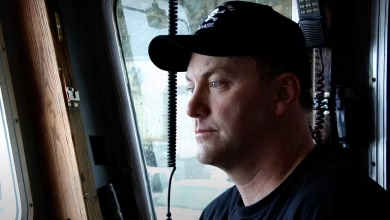
Sig Hansen Faces a Ruthless Rival on ‘Deadliest Catch’ — Can Sig Hansen Defend His Territory?
Sig Hansen’s Turf War on Deadliest Catch: A High-Stakes Battle for Crab in Season 21
The Bering Sea, a relentless proving ground for the captains of Deadliest Catch, is no place for the faint of heart. In Season 21, Captain Sig Hansen, the seasoned commander of the F/V Northwestern, finds himself in a fierce showdown over a prime crab fishing spot. Known for his strategic prowess and unyielding determination, Hansen has staked his claim in a remote corner of the sea, far from the main fleet, in pursuit of a lucrative haul. But when a rival captain encroaches on his territory, Hansen’s competitive instincts ignite, leading to a high-stakes gamble that could either secure his season or leave him empty-handed. This dramatic episode, aired on Discovery Channel in August 2025, showcases Hansen’s relentless drive, the risks of crab fishing, and the delicate balance of alliances and rivalries in the Bering Sea.
Staking Out the “Rocky” Grounds
With decades of experience navigating the unpredictable waters of the Bering Sea, Sig Hansen has a knack for finding crab where others dare not venture. In this episode, he positions the F/V Northwestern in a secluded area he dubs “Rocky” due to its challenging terrain of humps and bumps. “There’s very little boats down here, and we just chose to come down here and try to play our own game,” Hansen declares, emphasizing his strategy of avoiding the crowded fishing grounds. His plan pays off initially, as the first pots hauled aboard are brimming with crab. “Forty-eight! That’s what we’re looking for!” Hansen exclaims as his crew pulls up pots averaging 60 to 80 crabs each, a stellar catch that promises a significant payout. The crew, energized by the haul, nicknames the spot “Rocky” in a nod to its rugged nature and their hopes for a knockout season.
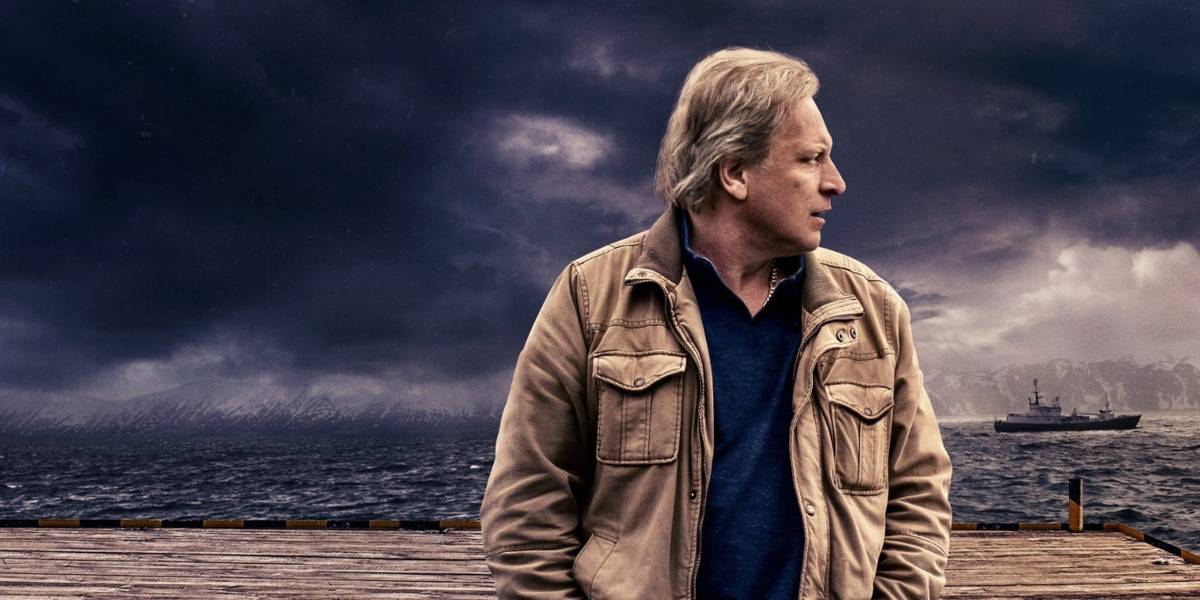
The early success is a testament to Hansen’s instincts. “This is awesome. Right now, you got to fight, Rocky,” he says, reveling in the steady stream of crab. The string yields an estimated 1,500 crabs, a “badass” result that has the crew buzzing with excitement. However, the euphoria is short-lived. As the Northwestern continues fishing, Hansen spots another vessel setting gear just four-tenths of a mile away, paralleling his string of pots. “What the hell? There’s another boat already that’s been setting right down the side of this string,” he fumes. The rival captain’s bold move threatens to siphon off the crab Hansen’s crew has worked hard to locate, setting the stage for a turf war.
The Gloves Come Off
Hansen, never one to back down from a challenge, decides to fight fire with fire. “We’re doing 60, 70, 80 steady. This is what we’ve been looking for, and I’m not going to give it away,” he vows. Determined to protect his hot spot, he devises an aggressive counterstrategy: drop 70 pots directly between the rival’s strings, threading the needle in a high-risk maneuver. “It’s going to be tight, man. It’s like threading a needle. But that’s what I’m going to do—to hell with it,” Hansen says, his voice laced with defiance. “No mercy. Gloves are off, man. Let her go.”

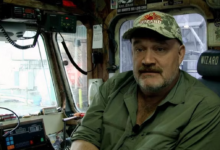
The move is a calculated gamble. By crowding the rival’s gear, Hansen aims to disrupt their fishing and secure his claim to the crab-rich grounds. “He’s right here with us, setting up and down,” Hansen observes, noting the rival’s proximity. The crew follows his orders, dropping pots with precision to outmaneuver the competition. However, the strategy carries significant risks. Overcrowding the area could deplete the crab population or lead to tangled gear, costing both time and money. “I don’t know if I caught a turf war, but we’re definitely going to get aggressive to protect this spot,” Hansen says, aware that his bold play could backfire.

A Risky Gamble Falls Short
As the crew hauls the newly set pots, the results are disheartening. The first pot yields a mere 16 crabs, a far cry from the earlier hauls. “Damn it, Rocky. Not good,” Hansen mutters, his frustration mounting. Subsequent pots are equally disappointing, with counts dropping to 11 and even fewer. “It’s getting worse. It’s getting worse,” he laments, realizing the turf war may have cost him more than he gained. The rival’s presence seems to have disrupted the crab migration, and Hansen begins to question his decision. “I think I made a mistake,” he admits to the camera. “It might have been a one-hit wonder. We might have got the cream right when we were here the first time.”
Reflecting on the outcome, Hansen acknowledges the gamble’s failure. “We did take a big gamble. There’s only so much to go around, you know. Was it worth it? Probably not,” he says. In hindsight, he believes moving the pots to the northeast might have yielded better results. “Life isn’t easy, so you know, you got to suck it up and swallow it. Fine. My bad,” he adds, taking responsibility for the misstep. The crew, though disappointed, presses on, knowing that crab fishing is as much about resilience as it is about strategy.
Alliances and Deception in the Bering Sea
Meanwhile, 460 miles to the northwest, Captain Keith Colburn of the F/V Wizard is enjoying his own hot streak, pulling 29 crabs per pot in just 21 hours. Colburn’s success highlights the competitive nature of the fishery, where finding and holding a productive spot is paramount. However, his decision to share information with another captain, Junior, stirs tension among his crew. “I don’t blame him for doubting the captain and saying, ‘Why are you sharing this information? We’ve been working for this crab, and now he’s giving it away,’” a crew member remarks. The alliance, meant to foster cooperation, feels inequitable when Junior sets gear in Colburn’s patch, capitalizing on their hard work.

Colburn, aware of the game’s unwritten rules, engages in a bit of “cloak and dagger.” When speaking with Junior over the VHF radio, he downplays his haul, claiming a pot had only a “tango kilo” (a coded term implying a low count) when it actually contained 20 crabs in 11 hours. “There’s guys that scan the VHF. They’re listening in to see what other guys are doing,” Colburn explains, justifying his deception as part of the old-school tactics of crab fishing. The exchange underscores the delicate balance of trust and rivalry that defines the fleet, where information is both a currency and a weapon.
Implications for Hansen and the Northwestern
Sig Hansen’s turf war is a microcosm of the challenges he faces in Season 21, both on and off the water. His recent health scares—a near-fatal infection in 2025, a 2016 heart attack, and a 2018 allergic reaction—have forced him to confront his mortality, as detailed in a previous Deadliest Catch update. These struggles have shifted his priorities toward family, particularly his wife June, daughters Mandy and Nina, and granddaughter Sailor Marie. Yet, his competitive spirit remains undimmed, as evidenced by his aggressive response to the rival captain. The failed gamble in “Rocky” serves as a reminder that even the most experienced captains can misjudge the sea’s unpredictable nature.
For the F/V Northwestern, the episode raises questions about Hansen’s long-term strategy. With Mandy Hansen taking on a larger role, the vessel’s future seems secure, but Sig’s health concerns and hints of retirement loom large. Fans on social media, as reported by TV Shows Ace, speculate that Season 21 could be his last, though Hansen has not confirmed any plans to step away. His decision to fight for the crab grounds reflects his unwillingness to cede control, both of his fishing territory and his legacy. However, the physical and emotional toll of such battles may push him closer to shore.

A Season of High Stakes and Hard Lessons
The turf war episode, aired on August 15, 2025, encapsulates the essence of Deadliest Catch: high-stakes risks, fierce competition, and the relentless pursuit of crab in one of the world’s most dangerous workplaces. Sig Hansen’s battle to protect his hot spot, though unsuccessful, showcases his tenacity and willingness to go all-in, even at the risk of coming up empty. As he reflects on his mistake, Hansen’s humility and accountability resonate with viewers, adding depth to his larger-than-life persona.
For fans, the episode is a thrilling reminder of why Deadliest Catch remains compelling after 21 seasons. The interplay of strategy, rivalry, and human drama keeps the show anchored in authenticity. As Hansen navigates the Bering Sea’s challenges and his own personal journey, his story continues to captivate, proving that the heart of a captain beats strongest when the stakes are highest. Tune in to Deadliest Catch on Fridays at 8 p.m. on Discovery Channel to see how Hansen and the Northwestern fare in the rest of Season 21.