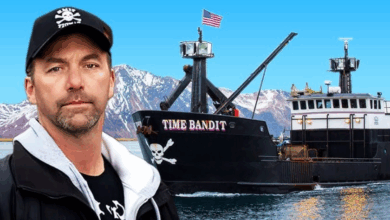
Deadliest Catch Crew Faces Double Disaster: Tank Leak and Serious Injury at Sea – Can They Make It Back Safely?
Deadliest Catch Crew Faces Double Disaster: Tank Leak and Serious Injury at Sea – Can They Make It Back Safely?

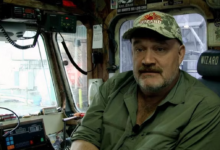
With just seven days left before cannery doors close, the stakes could not be higher for Captain Rick Shelford aboard the Illusion Lady. Battling brutal winter conditions in pursuit of Opilio crab, the crew found themselves facing not one — but two serious emergencies that threatened both their catch and their safety hundreds of miles offshore.
Winter fishing for Opilio is unforgiving under the best circumstances. Towering 20-foot breakers, freezing spray, and relentless fatigue are standard operating conditions. But with 40,000 pounds still left to harvest and time rapidly running out, Captain Shelford made the decision to redeploy his entire 120-pot load in a last-ditch effort to hit quota before processors shut their doors. It was a high-risk move driven by high stakes.
“We don’t have time to waste,” Shelford told his crew as the vessel rolled violently in heavy seas. With tens of thousands of pounds still unaccounted for, every string of pots mattered. The western grounds were showing better signs, and he gambled on shifting the gear to chase stronger numbers.
Then came the alarm.
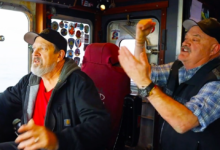
A lab alarm — the warning no captain wants to hear in heavy weather. The lazarette, or “laz,” sits in the outermost compartment of the vessel, between the hull and the rear crab tank. If seawater breaches that space, flooding can escalate quickly and with catastrophic consequences.
“If salt water starts getting in, that’s how boats sink,” one crew member warned as they opened the hatch.
Inside the lazarette, several feet of water were already pooling. The danger was immediate and severe. If flooding continued unchecked, the stern-heavy vessel could be dragged under in minutes — and in over 400 feet of water, rescue would be unlikely.
Shelford ordered deckhand Noah to begin pumping out the compartment immediately while the crew searched for the source of the leak. In conditions like these, time is everything. If pumps can’t keep up with incoming water, disaster follows fast.

After a tense inspection, the culprit appeared to be a leak from the number three crab tank into the lazarette. That tank alone held approximately 65,000 pounds of crab — worth an estimated $420,000. Draining it would mean sacrificing a massive payday, but leaving it could mean losing the boat entirely.
“Plug that thing up. Let me know how it goes,” Shelford ordered, weighing risk versus reward in real time.
The crew managed to patch the leak temporarily and stabilize the flooding. For now, the pumps were winning the battle. The Illusion Lady adjusted position slightly westward, chasing better sonar sign while keeping a close eye on the compromised tank.
The tension broke briefly when a strong pot came up on deck — 666 crabs. A number that drew uneasy laughs, but one that signaled a healthy average. With numbers pushing toward the 400-per-pot target Shelford had hoped for, optimism flickered back to life.
But relief was short-lived.
Moments later, chaos erupted on deck. Amid the grinding rhythm of hauling gear in heavy seas, deckhand Noah was struck in the mouth by a picking hook. The metal tool, swung unpredictably by the vessel’s motion, connected with brutal force.
“Everybody okay?” Shelford shouted.
Noah wasn’t.
The impact cracked his tooth high near the gumline, exposing the root. Blood mixed with salt spray as the crew helped him up from the deck. In the unforgiving environment of a crab boat, injuries can escalate quickly. A cracked tooth might not sound life-threatening, but exposed nerves and potential infection in freezing offshore conditions present serious complications.

“It’s like getting punched in the face by Mike Tyson,” one crewmember said grimly.
Shelford assessed the damage and made another difficult call. They would head toward Dutch Harbor to get Noah to a dentist. Time lost steaming to port meant less time fishing — and less time to fill the remaining quota before the cannery deadline. But crew safety comes first.
“We just got to get in there safely, get Noah to the dentist, and then get our asses out of there as quick as we can because I still have crab to catch,” Shelford said.
The dual emergencies underscore the razor-thin margins in winter crab fishing. Mechanical failure, flooding, and physical injury are not rare occurrences — they are occupational hazards. Every trip balances profit against peril.
For the Illusion Lady, the immediate crisis appears contained. The lazarette leak is patched — temporarily. The crab tank still holds its valuable cargo. But the clock is ticking. With only days left before processors close and thousands of pounds still to harvest, every hour spent off the grounds chips away at potential earnings.
At sea, there are no easy decisions — only necessary ones.
As the vessel steams toward port with one injured deckhand and a patched tank, Captain Shelford faces the same relentless equation that defines winter fishing: protect the crew, protect the boat, and somehow still make the numbers.
“It’s not where I want to be,” he admitted. “But it’s where I’m at.”