Behind the Wheelhouse Doors of ‘Deadliest Catch’: What Are Captains Hiding From Reality TV Audiences?
Behind the Wheelhouse Doors: When ‘Deadliest Catch’ Stops Being About Crab
For more than two decades, Deadliest Catch has sold itself on danger. Rogue waves. Ice-coated decks. Steel pots swinging like wrecking balls. But in its September 19, 2025 episode, “Bering Seas Casino,” something quietly shifted. The most dangerous threats no longer came from the sea itself. They came from behind the wheelhouse doors.
This season, the Bering Sea feels less like an ocean and more like a psychological pressure chamber. Engines still fail, storms still rage, and quotas still loom—but the true drama unfolds in moments of human fracture: a captain snapping at his crew, another collapsing under the weight of expectation, and a legend refusing to slow down even as illness spreads across his deck.
Captain Keith Colburn’s Wizard became the clearest example of this transformation. Docking in Dutch Harbor amid 50-knot winds should have been routine chaos. Instead, it devolved into a shouting match that exposed deeper cracks. Co-captain Monte Colburn summed it up bluntly: “This boat’s a stress factory.”
The immediate problem was deckhand Calvin—a green recruit who hadn’t pulled a single pot yet somehow felt entitled to authority and cash. His demand for a $7,500 draw, followed by a frantic text asking for $10,000 “within the next hour,” was more than a financial red flag. It was a test of leadership under exhaustion.

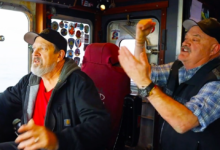

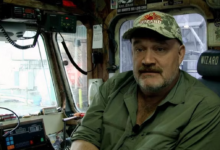
Keith shut him down, but the incident revealed something else: a captain stretched so thin that patience had evaporated. Just one week earlier, Keith had fired another rookie. This wasn’t coincidence—it was erosion.
Deadliest Catch has always shown firings. What felt different here was the tone. Keith wasn’t just enforcing standards; he was protecting his sanity. When Calvin resurfaced job-hunting on Sig Hansen’s Northwestern—after Keith had already paid for his flight home—the situation exploded. Keith tracked him down at a waterfront bar, canceled the ticket, and gave him 60 seconds to check in. The exchange ended with insults and middle fingers.
On the surface, it was classic Keith Colburn fury. Beneath it, though, was something quieter and more unsettling: a leader who no longer had emotional margin for mistakes.
That theme echoed across the fleet.
On the Titan Explorer, Captain Jake Anderson stood in his wheelhouse staring down a $3 million bairdi quota—one of the largest of his career. The numbers alone would crush most captains. But Jake wasn’t just managing pots and fuel. He was managing panic.
A leak discovered by engineer Felipe Miramontes threatened to sink the trip before it started. As water seeped in from outside the hull, Jake unraveled. Alone in the wheelhouse, he called his wife Jenna and said the unthinkable.
“I’m done. I hate this job. I want to quit.”
This wasn’t a rookie meltdown. This was a seasoned captain admitting fear—not of the sea, but of himself breaking under the load. Jake’s confession marked one of the rawest moments the show has ever aired, signaling that Deadliest Catch had crossed fully into emotional documentary territory.
Then there was Johnathan Hillstrand.
On the Time Bandit, a norovirus ripped through the crew. Men vomited over rails and into buckets. Hillstrand’s wife Heather battled a 102-degree fever ashore. Yet Hillstrand himself seemed almost amused, crediting his gallon-a-day milk habit for his immunity.
“You can’t let the flu win,” he said, pushing the skeleton crew toward a critical delivery deadline.
Where Jake cracked and Keith exploded, Hillstrand refused to acknowledge vulnerability at all. He powered through illness with sheer force of will—an approach that worked, but at a cost the episode never explicitly named.
Taken together, these stories reveal a profound shift in Deadliest Catch. The show is no longer simply about surviving the Bering Sea. It’s about surviving the role of captain itself.
Leadership here means absorbing every failure, every risk, every dollar lost or gained. It means firing people you don’t trust, pushing sick crews past their limits, and carrying financial pressure home in the middle of the night. Over time, that weight doesn’t disappear. It accumulates.
“Bering Seas Casino” wasn’t flashy. There were no miracle hauls or last-second jackpots. Instead, it showed something far rarer: men confronting the edges of their endurance.
The episode ends without resolution. The boats return to the grounds. The quotas remain. The storms haven’t stopped.
But something fundamental has changed. The question is no longer whether the sea will break these captains.
It’s whether they can survive themselves.