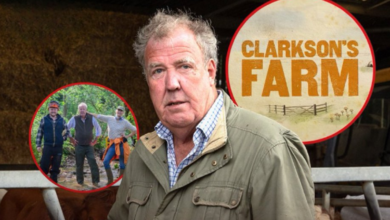
How Did ‘Clarkson’s Farm’ Outshine a Decade of Farming Campaigns — And Why Does It Work So Well?
Why ‘Clarkson’s Farm’ Has Done More to Promote Farming, Agriculture, and Food Than All the Marketing Campaigns of the Last Decade Put Together
In an era dominated by slick advertising and social media influencers, one unlikely television series has emerged as a powerhouse in promoting the gritty realities of farming, agriculture, and food production. Clarkson’s Farm, the Amazon Prime Video documentary-style show starring former Top Gear host Jeremy Clarkson, has captivated millions by blending humor, chaos, and hard-hitting truths about rural life. Since its debut in 2021, the series has not only entertained but also educated urban audiences on the challenges faced by British farmers, sparking a surge in support for local produce and even influencing policy changes. But why has this show, helmed by a celebrity known more for revving engines than tending crops, outperformed a decade’s worth of polished marketing campaigns from agricultural organizations and food industries? The answer lies in its authenticity, massive reach, and ability to humanize an often-overlooked sector.
At its core, Clarkson’s Farm follows Jeremy Clarkson as he attempts to manage his 1,000-acre Diddly Squat Farm in the Cotswolds. What begins as a seemingly lighthearted venture—Clarkson buying the farm in 2019 after the retirement of its previous manager—quickly evolves into a raw portrayal of modern farming’s trials. Viewers witness everything from bureaucratic red tape and unpredictable weather to the financial razor-thin margins that plague the industry. The show’s premise is simple yet compelling: a novice farmer grappling with real-world issues like crop failures, animal husbandry, and diversification efforts, all delivered with Clarkson’s signature wit and exasperation. As of August 2025, the series boasts four seasons, with a fifth in production, and has been renewed due to overwhelming demand.

The appeal of Clarkson’s Farm stems from its unfiltered honesty, which contrasts sharply with the sanitized narratives of traditional marketing. Clarkson doesn’t shy away from the hardships: long hours, isolation, and the fact that farmers often receive less than 10% of the retail price for their produce, with the bulk going to distribution chains. Episodes highlight issues like soil degradation, the push for sustainable practices such as regenerative farming (which restores soils and boosts biodiversity through minimal tillage and crop rotation), and the emotional toll of livestock losses. This educational layer is wrapped in entertainment—think Clarkson bungling tractor operations or clashing with local council regulations—making complex topics accessible and engaging. As one viewer noted on social media, “Clarkson does a brilliant job of highlighting just how tough farming is by comparing his situation to a ‘true’ farmer trying to make a living.”
Viewership statistics underscore the show’s unprecedented reach. The third season’s premiere drew 5.1 million viewers in its first seven days in the UK alone, making it Amazon Prime’s most-watched original series and surpassing even high-budget productions like The Lord of the Rings: The Rings of Power. By the fourth season in 2025, episodes averaged 4.4 million viewers, with the second episode hitting 5 million in seven days. Globally, demand spiked by 39.2% in April 2025, reflecting its international appeal. These numbers dwarf those of typical agricultural marketing efforts. For instance, while campaigns like the U.S. Department of Agriculture’s farmers’ market promotions saw growth from 1,755 markets in 1994 to 8,771 in 2019, they haven’t achieved the viral, mainstream penetration of Clarkson’s Farm.

The impact on public perception of farming, agriculture, and food is profound. The show has been credited with a “Clarkson effect,” driving a boom in British produce sales. Following the third season’s release, demand for UK-grown meat, fish, fruit, and vegetables surged significantly, with pork sales rising after Clarkson introduced a herd of pigs. A Times article highlighted how the series influenced consumer behavior, leading to increased supermarket demand for locally grown items. Moreover, agricultural student numbers rose by 20% in 2024, attributed in part to the show’s spotlight on farming careers. Farmers themselves praise it; the National Farmers’ Union named Clarkson the 2021 Farming Champion of the Year for showcasing realities that resonate with the industry. Social media echoes this sentiment: “Clarkson’s Farm has done more for farming in the past two years than [BBC’s] Countryfile has done in the past two decades,” one user posted.
Policy changes further demonstrate the show’s influence. The so-called “Clarkson’s clause” reformed UK planning regulations, allowing farmers to convert disused buildings without permission, easing diversification efforts. Innovations like “Clarkson’s Ring,” a device to reduce piglet mortality, have improved animal welfare practices. Even global figures, such as author Nassim Nicholas Taleb, drew lessons from the show, noting how globalization affects prices and the need to lower distribution costs for organic farming.
In comparison, marketing campaigns over the last decade have often fallen short. Initiatives like social media strategies on platforms such as Instagram and YouTube—focusing on “Faces of Farming” quizzes or visual showcases—have aimed to humanize the sector but lack the narrative depth and celebrity pull of Clarkson’s Farm. Campaigns from agencies like Rhea + Kaiser or Farm Progress have produced impactful ads, such as those highlighting crop diversity or precision advertising, but they remain niche, targeting industry insiders rather than broad audiences. A 2022 roundup of top agricultural ads in France emphasized sector figures, yet none achieved the cultural phenomenon status of Clarkson’s series. Traditional efforts, often funded by governments or trade bodies, come across as corporate and preachy, failing to engage emotionally. As one analyst put it, “Four agri-marketing campaigns any marketer can learn from” highlight creativity, but they don’t boast the 85 million views Clarkson’s Farm garnered in a single month.
What sets Clarkson’s Farm apart is its ability to spark widespread discussion. On platforms like X (formerly Twitter), users hail it as “the most important agricultural programme on TV for decades,” outshining long-running shows like Countryfile. Posts from farmers and enthusiasts alike emphasize its role in exposing issues like energy-intensive costs and regulatory burdens, with one noting, “Farmers want to be farmers, not park rangers.” Even international adaptations, like Norway’s Jon Blir Bonde, reflect its global ripple effect.
In conclusion, Clarkson’s Farm has revolutionized the promotion of farming, agriculture, and food by making it relatable, entertaining, and urgent. While marketing campaigns of the past decade have chipped away at awareness through targeted ads and social pushes, they pale against the show’s massive viewership, cultural impact, and tangible outcomes like boosted sales and policy reforms. As Clarkson himself might quip, it’s done more good than a decade of glossy brochures combined—proving that sometimes, a bit of mud and mayhem is the best way to sow seeds of change. With farming facing climate pressures, economic strains, and generational shifts, the series serves as a timely call to action: support local, understand the struggles, and celebrate the backbone of our food system.