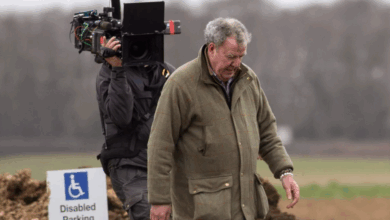
Labour Scales Back Farmers Inheritance Tax After Jeremy Clarkson-Led Protests: Did the Demonstrations Actually Work?
Labour Waters Down Farmers’ Inheritance Tax Raid After Months of Furious Protests Led by Jeremy Clarkson

Sir Keir Starmer has been forced into a partial retreat on Labour’s deeply controversial inheritance tax plans for farmers, following more than a year of sustained protests and mounting pressure from MPs, agricultural groups, and high-profile campaigners including Clarkson’s Farm star Jeremy Clarkson.
In a move quietly announced just days before Christmas, the Prime Minister confirmed that the threshold at which inheritance tax applies to agricultural assets will be raised from £1 million to £2.5 million. This change means that married couples will now be able to pass on up to £5 million worth of farmland and agricultural property between them before being hit by the levy.
While Labour insists the policy remains fair, critics have branded the announcement a humiliating climbdown and the latest in a long list of broken promises by the Prime Minister.
A Protest Movement That Wouldn’t Go Away
The concession follows 14 months of furious protests across the country, with farmers warning that the original tax proposal would devastate family-run farms and accelerate the collapse of Britain’s rural economy. Demonstrations reached a boiling point earlier this year when thousands of agricultural workers descended on Westminster, waving placards reading “Keir Starmer farmer harmer” and “No farmers, no food, no future”.
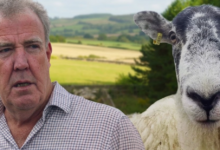
Jeremy Clarkson, whose Amazon Prime series Clarkson’s Farm has shone a spotlight on the realities of modern British farming, became an unlikely figurehead for the campaign. Clarkson repeatedly used his platform to accuse Labour of being “utterly disconnected” from rural life and warned that the tax raid would force families to sell land that had been farmed for generations.
Under the revised policy, the number of estates expected to be affected by the tax will fall from an estimated 375 to 185. However, the Treasury has acknowledged that the change will cost £130 million in lost revenue.
Labour Defends the U-Turn

Environment Secretary Emma Reynolds attempted to strike a conciliatory tone as she announced the revised threshold, insisting the government had listened to farmers’ concerns.
“Farmers are at the heart of our food security and environmental stewardship,” she said. “I am determined to work with them to secure a profitable future for British farming.
“We have listened closely to farmers across the country and we are making changes today to protect more ordinary family farms. It’s only right that larger estates contribute more, while we back the farms and trading businesses that are the backbone of Britain’s rural communities.”
Despite the reassurances, many within Labour’s own ranks remain uneasy. MPs representing rural constituencies have been privately and publicly furious ever since the tax was first announced in last year’s Budget by Chancellor Rachel Reeves. Several had spent months lobbying the Prime Minister to reverse course, only to be repeatedly rebuffed.
As recently as last week, Sir Keir was still publicly defending the policy. Earlier this month, Labour even suspended MP Markus Campbell-Savours for rebelling against the inheritance tax plans, a move critics now say looks particularly heavy-handed in hindsight.
A Pattern of Broken Promises
The farm tax concession has quickly been framed as the latest in a growing list of U-turns by the Prime Minister, whose authority has increasingly been undermined by public backlash and pressure from his own backbenchers.
Since taking office, Sir Keir has already changed course on winter fuel payments, welfare reform, workers’ rights legislation, and a promised national inquiry into grooming gangs. He has also reversed his position on defining what constitutes a woman and approved cuts to the international aid budget.
Most damagingly, voters have expressed anger over Labour’s abandonment of high-profile manifesto pledges not to raise VAT, National Insurance, or income tax. The increase in employer National Insurance contributions announced in last year’s Budget, alongside the freezing of income tax thresholds revealed last month, have been widely described as clear breaches of trust.
One Labour MP admitted privately: “Every time we blink, we look weaker. This tax U-turn only reinforces the idea that the government doesn’t know what it believes until voters force its hand.”
Political Reaction Across the Spectrum

Reform UK Deputy Leader Richard Tice delivered one of the strongest responses, accusing Labour of causing irreversible damage to the farming community.
“Labour’s tax raid on family farms has already been a disaster for the sector,” he said. “It has plunged countless farmers into despair, with heartbreaking reports of some taking their own lives in order to save their farms for future generations.
“This cynical climbdown—while better than nothing—does little to undo the year of anxiety farmers have faced. Even with the raised threshold, many family farms will still face crippling bills. The government must go further and abolish this callous farms tax altogether.”
Conservative leader Kemi Badenoch also claimed victory, calling the announcement “a huge U-turn” and crediting her party’s sustained campaign against what it branded Labour’s “Family Farm Tax”.
“Earlier this year, I was told to drop the campaign—that there weren’t many farmers, and people assumed they were wealthy,” she said. “This proves how wrong that thinking was.”
The Liberal Democrats welcomed the change but said it did not go far enough. Party leader Sir Ed Davey and rural affairs spokesman Tim Farron both called for the tax to be scrapped entirely, accusing the government of putting farming families through “utterly inexcusable” uncertainty.
Relief, But Not Resolution
Tom Bradshaw, President of the National Farmers’ Union, said the announcement would come as “a huge relief to many”, but stopped short of full endorsement.
“While there is still tax to pay, this will greatly reduce the burden for many working family farms,” he said. “However, uncertainty remains, and farmers need long-term stability, not last-minute concessions.”
With Labour MPs now openly suggesting pubs could be the next target for tax relief following pressure from landlords and rural businesses, one backbencher summed up the mood in Westminster succinctly: “Farms—sorted. Pubs—next.”
For Britain’s farmers, however, the question remains unresolved: has Labour truly learned from the backlash, or is this merely another temporary retreat before the next policy storm breaks?