Jeremy Clarkson Takes Legal Action After Deepfake Scandal — What Disturbing Content Threatens His Reputation?
Jeremy Clarkson Makes Bold Legal Move to “Protect His Legacy” After Disturbing Deepfake Discovery
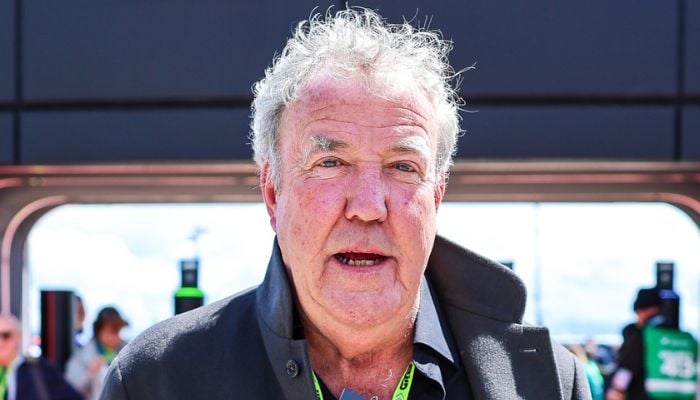
Jeremy Clarkson has never shied away from controversy, bold statements, or unexpected decisions. But his latest move may be one of his most unusual yet—and, in his view, one of the most necessary. The Clarkson’s Farm star has revealed that he is officially trademarking his own face in a bid to protect the public from increasingly sophisticated AI deepfake scams. Far from vanity, Clarkson insists the decision is an act of self-defense—and public defense—against a rising tide of fraudulent content misusing his identity.
The 65-year-old presenter, known globally for Top Gear, The Grand Tour, and his farming escapades on Amazon Prime, said he has become a favorite target for scammers who exploit his face, voice, and reputation to promote cryptocurrencies, dodgy mortgage schemes, and other financial traps. Speaking to The Sun, Clarkson explained that he has repeatedly had to call out fake ads featuring AI-generated versions of himself endorsing products he has never heard of.
“It’s an AI thing,” he said. “There’s so much activity around bitcoin or mortgage loans where my face, name, image, voice and so on has been used to promote things that I’m not promoting. I’m protecting people from ‘me,’ but it’s not me. God, it’s absurd.”
To combat the escalating issue, Clarkson is following in the footsteps of major celebrities such as four-time Formula 1 world champion Max Verstappen, who has also trademarked his image under European trade laws. The legal protection will give Clarkson more power to challenge fraudulent content and pursue those who attempt to profit from fake versions of him.
A Growing Wave of Deepfake Abuse
Deepfake technology has advanced rapidly in recent years, making it easier than ever for scammers to create realistic videos and audio of famous individuals. Clarkson’s trademark move highlights a growing concern in the entertainment world: how do public figures protect their identity in an era where anyone can create a convincing imitation with a few clicks?
Clarkson’s image is particularly vulnerable due to his international fame and outspoken persona. Scammers frequently use well-known personalities to make fraudulent ads appear legitimate, and Clarkson’s direct communication style makes fake endorsements seem even more believable to unsuspecting viewers.
By trademarking his face and identity, Clarkson hopes to reduce the damage. “It’s absurd I even have to do this,” he admitted, “but this is where technology is now.”
Candid About Health, Weight Loss, and Life Changes
This legal move comes at a time when Clarkson has been unusually candid about personal issues—including his health and weight loss journey. In recent weeks, he has spoken openly about using Mounjaro, a medication best known for treating diabetes and increasingly used for weight management. Clarkson previously experimented with Ozempic but later switched to Mounjaro, though not without unexpected side effects.
Posting on X (formerly Twitter), Clarkson joked about one particularly embarrassing situation: “Mounjaro problem I never saw coming. At airports you’re made to remove your belt and then told to stand in the body scanner with your arms in the air. So you can’t hold your trousers up.”
The comment quickly went viral, with fans praising Clarkson’s trademark honesty and humor about his lifestyle changes.
Despite these personal obstacles, Clarkson continues to run Diddly Squat Farm and The Farmer’s Dog—his boutique Cotswolds pub—with notable success. But even his business ventures haven’t been free from controversy.
A Birthday Cake Ban at The Farmer’s Dog
Recently, Clarkson enforced a surprising prohibition at The Farmer’s Dog after a customer attempted to bring a birthday cake into the establishment. While such a request seems harmless, it directly violated one of Clarkson’s strict policies: every ingredient served in the pub must originate within a 16-mile radius.
The Daily Express reported that this cake broke the rule, prompting staff to refuse it. Clarkson has long been committed to supporting British farmers by keeping his pub’s supply chain local, though he does acknowledge that not everything can meet the 16-mile standard.
On the pub’s official website, Clarkson explains: “I have tried my absolute hardest to make sure that every single thing you consume in The Farmer’s Dog was grown or reared by British farmers. But there have been some problems—like, for instance, the simple G and T. You can’t have a pub that doesn’t offer a gin and tonic. But there is quinine in tonic water, and you can’t grow that in Britain.”
With typical Clarkson wit, he continued: “Sure, I could have served gin and water instead, but I didn’t think you’d enjoy it very much. Especially as, instead of a slice of lemon, you’d have been given a slice of turnip or some potato peelings.”

Protecting His Present—and His Legacy
Between deepfake threats, health transformations, and strict farm-to-table policies, Clarkson seems to be entering a new chapter—one defined not by chaos, but by control. Trademarking his face ensures that long after he is gone, forgeries, scams, and AI manipulations cannot exploit his identity unchecked.
For a man whose public image has always been larger than life, the move signals something deeper: an effort to preserve the real Jeremy Clarkson in an age when technology can manufacture a thousand fake ones.
Whether on the farm, online, or in the public eye, Clarkson remains determined to protect both himself and his fans—even if it means navigating the strange, modern world of artificial intelligence, image rights, and trousers that won’t stay up at the airport scanner.