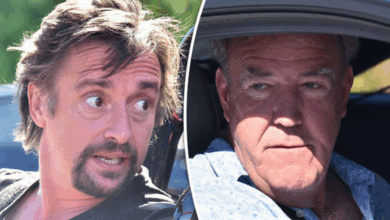
Jeremy Clarkson gives insight into farm life and warns of ‘catastrophic’ harvest. Could This Year’s Harvest Be His Worst Yet?
Jeremy Clarkson Warns of “Catastrophic” Harvest Amid Ongoing Farm Struggles
Television presenter and farmer Jeremy Clarkson has issued a stark warning about the state of farming in the UK, saying that this year’s harvest at his Oxfordshire farm is set to be “catastrophic.” The former Top Gear host, who has become an unexpected advocate for farmers through his Amazon Prime Video series Clarkson’s Farm, revealed that relentless weather conditions and the ongoing threat of bovine tuberculosis (TB) are taking a severe toll on his livelihood.
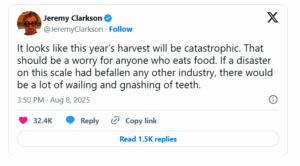
The warning came shortly after Clarkson disclosed that bovine TB had been detected on his Diddly Squat Farm, located near Chipping Norton. Writing on X (formerly Twitter) last week, Clarkson painted a grim picture of the months ahead. “It looks like this year’s harvest will be catastrophic,” he said. “That should be a worry for anyone who eats food. If a disaster on this scale had befallen any other industry, there would be a lot of wailing and gnashing of teeth.”
Clarkson’s post was met with a mix of sympathy and comments suggesting that the drama might at least make for compelling television. He responded with characteristic bluntness: “Yes. But most farms don’t have TV shows to keep them going.”

When asked whether Diddly Squat Farm could survive without its other income streams — notably Clarkson’s farm shop and the pub he opened nearby — his answer was equally bleak: “Not a cat in hell’s chance.” These remarks highlight a harsh reality for many farmers in the UK, where income from agricultural production alone often fails to cover operational costs, forcing farms to diversify into retail, hospitality, or tourism.
Clarkson also pointed to the weather as a major culprit behind his gloomy forecast. “Normal weather would help,” he wrote. “It never stopped raining in 2024 and never started in 2025.” Excessive rainfall can wreak havoc on crops, delaying planting, damaging yields, and making harvesting far more difficult. For livestock farmers, persistent wet weather can also increase the spread of disease and make grazing land unusable.
The situation worsened last Thursday when Clarkson confirmed that a pregnant cow on his farm had tested positive for bovine TB. Under UK regulations, cattle that fail a TB test, or those with inconclusive results on two consecutive tests, are classified as “reactors.” These animals must be immediately isolated from the rest of the herd and eventually slaughtered to prevent the spread of the disease.
When a follower on X inquired about Endgame, Clarkson’s recently purchased prize bull valued at £5,500, he replied: “His test was ‘inconclusive’. I couldn’t bear it if we lost him.” An inconclusive result means the animal must be retested after 60 days, creating weeks of anxiety for the farmer.
Bovine TB is one of the most devastating diseases affecting cattle herds in the UK. Caused by the bacterium Mycobacterium bovis, it is primarily transmitted through respiratory droplets, spreading when cattle breathe in infected mucus from other animals. While cattle-to-cattle transmission is common, badgers are also known carriers. The role of badgers in spreading the disease has been a source of heated debate for years.
As part of its control strategy, the UK government has implemented badger culls in certain high-risk areas. Supporters argue that reducing badger populations can slow the spread of the disease, while critics, including wildlife and animal welfare campaigners such as Queen guitarist Sir Brian May, have condemned the cull as inhumane and ineffective.
In June, the government announced it would not extend the badger cull and reaffirmed its plan to end the practice entirely before the next general election. Oxfordshire, where Clarkson farms, is considered an “edge area” for bovine TB — a buffer zone between high- and low-risk regions. Farms in these areas are typically required to conduct TB tests every six months, placing them under constant scrutiny and operational pressure.
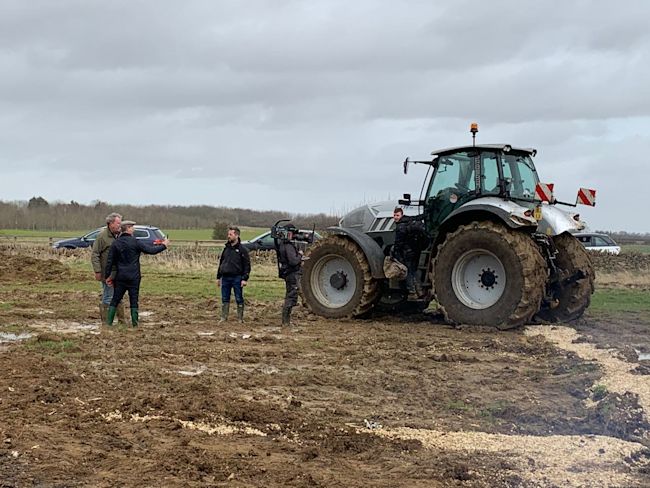
The challenges facing Clarkson’s farm mirror those endured by thousands of British farmers. The Prime Video series Clarkson’s Farm, which debuted in 2021, has shone a spotlight on the day-to-day struggles of rural life, from unpredictable weather and fluctuating crop prices to the mountain of bureaucracy farmers face.
Over the past few years, Clarkson has transitioned from a motoring journalist known for his irreverent humour to a surprisingly passionate voice for UK farmers. In November 2024, he joined a protest in London opposing the government’s proposed inheritance tax on farmland — a policy many in the industry fear could make it harder for family farms to pass their land down to the next generation.
For now, Clarkson’s outlook remains grim. With poor weather, the looming impact of bovine TB, and broader economic pressures, the coming months could test the resilience of Diddly Squat Farm like never before. While television audiences may continue to enjoy the drama on screen, Clarkson’s latest warnings make it clear that the stakes for real-life farmers are far higher than ratings or reviews.