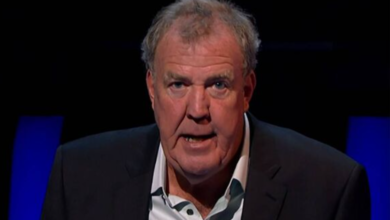
Jeremy Clarkson Admits Diddly Squat Farm “Would Stop Breaking Even” – Is Financial Collapse Inevitable?
Jeremy Clarkson Admits Diddly Squat Farm “Would Stop Breaking Even” – Is Financial Collapse Inevitable?
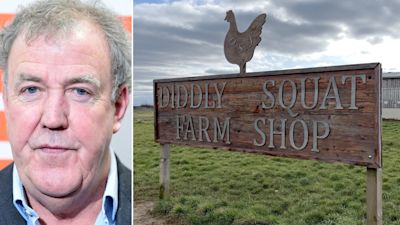
Jeremy Clarkson has once again sounded the alarm over what he believes is a looming financial crisis for British farming, admitting he fears even his own Diddly Squat Farm could be pushed from barely surviving into outright loss if Labour’s policies continue on their current path. In a fresh attack on the government’s decisions, the 65-year-old broadcaster and Clarkson’s Farm star warned that the reality of running a farm in modern Britain is already so tight that any extra burden—especially one that forces families to sell land—could destroy businesses that have taken generations to build. While Jeremy has never hidden his frustration at the way farming is treated in political debates, his latest comments strike a more personal and anxious tone, as he openly questions how long farms like his can keep going when they are expected to operate like profitable companies, despite facing rising costs, unpredictable weather, and a market that rarely rewards the farmer at the end of the chain.
In his latest Sunday Times column, Jeremy returned to the controversial issue of inheritance tax, a policy he has been campaigning against for months because he believes it misunderstands what a family farm actually is. Under the proposed changes announced by Chancellor Rachel Reeves, farms could face inheritance tax bills that many families simply cannot pay in cash, meaning the “solution” would often be to sell off land. Jeremy argued that this is not a small adjustment or an inconvenience, but something that could permanently break the model of family farming in the UK, because the land is not just property—it is the foundation of the business itself. He described the generational handover of a farm from parent to child as a moment that should secure the future of the farm, not trigger a financial crisis that forces it to shrink. In his view, the idea that a farm can survive after losing a major portion of its acreage is unrealistic, because once the land is reduced, the business loses its ability to operate at scale and becomes vulnerable to collapse.
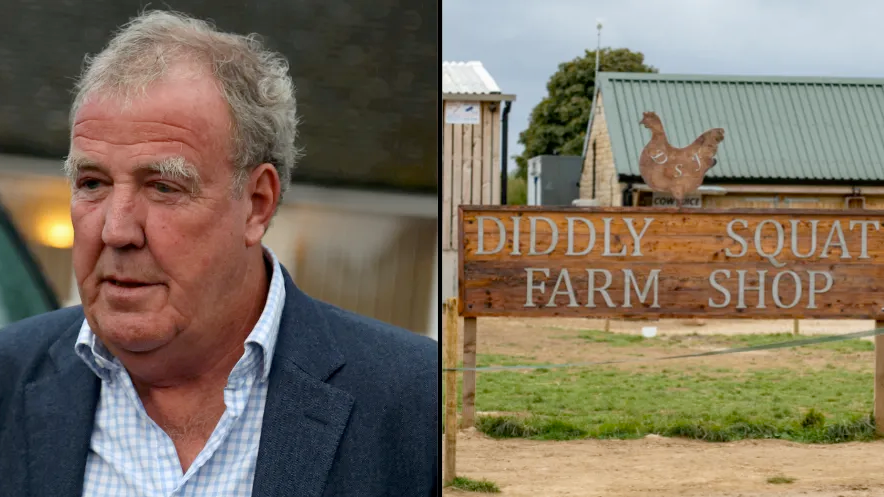
Jeremy’s warning became even sharper when he used his own farm as an example, admitting that even a thousand acres at Diddly Squat does not guarantee profit. He wrote that his farm, despite being far larger than what many would consider “small,” still does not truly make money in the way outsiders assume. Instead, it struggles to break even, surviving through tight margins and constant work rather than producing the kind of returns people imagine when they hear the word “landowner.” His blunt statement—“even a farm that big does not make money”—cuts through the romantic image of countryside life that many viewers associate with Clarkson’s Farm. According to Jeremy, the numbers are so unforgiving that if he had to sell even a third of his land to cover an inheritance tax bill, the farm would no longer balance out and would slip into loss. For him, this is the central fear: once land is sold, it is not simply a temporary sacrifice, but a permanent reduction that weakens the entire operation, leaving the next generation with a farm that is too small to sustain itself.
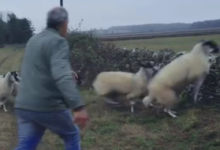
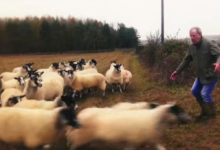
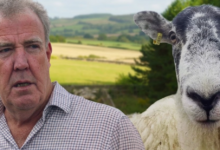
Although the government has adjusted parts of its inheritance tax plans, Jeremy insists the damage is still coming because many farms will remain exposed. He has repeatedly claimed that politicians underestimate how quickly a farm becomes “unviable” once land is taken out of the equation, and he believes the policy encourages exactly the wrong outcome: breaking up productive farms at a time when Britain should be protecting domestic food production. To Jeremy, the idea that farms should be treated like any other asset misses the deeper truth that farming is built on long-term knowledge, careful planning, and an understanding of land that cannot simply be replaced by a new owner with money. The farm is not just a thing you own—it is something you learn over decades, and something families often feel responsible for preserving rather than exploiting.
However, farming is not the only area where Jeremy says Labour’s decisions are making life harder. He has also been vocal about the pressure facing pubs and hospitality businesses, and he recently revealed that his own pub, The Farmer’s Dog, is being squeezed by rising business rates and increasing wage costs. Like many pub owners across the country, Jeremy says the numbers are becoming increasingly difficult to justify, even for venues that are popular and well-supported. He pointed to the experience of Michelin-starred chef Tom Kerridge, who reportedly faced a dramatic jump in rates at one of his businesses, as an example of how quickly these costs can spiral beyond what a venue can realistically absorb. Jeremy suggested that while his own situation is not quite as extreme, it is still bad enough to cause serious concern, especially when combined with other rising expenses that come with running a business.
Jeremy explained that the rateable value of his pub could rise sharply, pushing the annual cost up significantly, and he added that the national insurance rise has already increased his wage bill by tens of thousands of pounds a year. The overall picture he paints is one of a business environment where costs rise automatically, while profit remains uncertain, leaving owners feeling as though they are constantly one policy change away from disaster. His frustration is not just about his own finances, but about what he sees as a wider collapse in the viability of rural businesses, where farms, pubs, and local venues all depend on each other to keep communities alive. If farms shrink or fail, rural areas lose jobs and stability. If pubs close, villages lose gathering places and tourism suffers. For Jeremy, these are not isolated problems but connected pressures that slowly strip the countryside of what makes it function.

His anger has also spilled into open protest. Jeremy previously claimed he had banned Labour MPs from his pub in response to the rising costs, though he made an exception for one MP and added a sarcastic remark about that politician’s status within the party. Whether that ban is still in place remains unclear, but the statement itself shows how personal and bitter the issue has become for him. Rather than simply criticising from a distance, Jeremy has positioned himself as a voice of protest for farmers and rural business owners who feel ignored by decision-makers. Supporters argue he is saying out loud what many are thinking: that the countryside is being asked to shoulder costs it cannot afford, while policymakers treat farms and pubs as if they are luxury hobbies rather than fragile businesses that operate on the edge.
For viewers who know Jeremy primarily as a TV personality, these warnings may sound dramatic, but they fit with the storyline he has been building for years: that farming is not a quaint lifestyle, but a high-risk industry with relentless pressure and little reward. Clarkson’s Farm has repeatedly shown how quickly unexpected costs, broken machinery, poor weather, and market shifts can wipe out months of work, and Jeremy now seems determined to argue that government policy could be the final blow for many families already struggling to stay afloat. His message is simple but grim: if farms are forced to sell land to survive taxes, and rural businesses are hammered by rising costs, Britain risks losing more than just individual livelihoods—it risks losing the backbone of its countryside economy and its ability to feed itself.