A Heist Hits Mark and Digger’s Operation — How Did $11,000 in Moonshine Disappear Overnight?
Mark and Digger’s $11,000 Moonshine Heist in West Tennessee
In the shadowy world of East Tennessee moonshining, Mark and Digger faced a devastating blow when $11,000 worth of their premium liquor was stolen en route to a major buyer in Memphis. The duo, known for their high-quality corn liquor and savvy bootlegging operation, had orchestrated their first large-scale run to West Tennessee, a move aimed at expanding their illicit empire. But a critical misstep by their trusted distributor, Killer Beasley, turned their ambitious plan into a costly setback, forcing Mark and Digger into recovery mode to salvage their reputation and secure a key client.
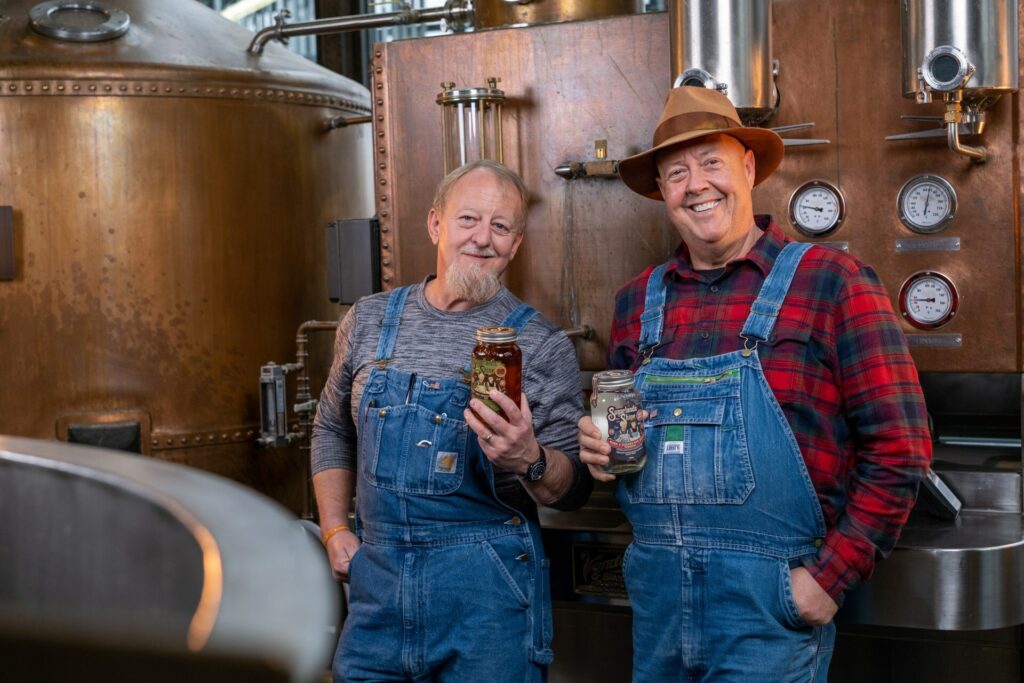
The operation began with high hopes. Mark and Digger had secured a deal to supply 48 boxes of moonshine to a well-connected buyer in Memphis, a city with a storied history of Prohibition-era revelry. “This is our first bonafide run from East Tennessee to West Tennessee,” Mark said, inspecting a jar of their crystal-clear liquor. “Pretty and clear, just like corn liquor should be.” To entice the buyer, they offered a discounted rate, banking on the quality of their product to establish a repeat customer. The plan was to hide the shipment in plain sight at a trusted friend’s warehouse, where the owner personally handled all loading and unloading. “Ain’t nothing to say this is liquor,” Digger noted, approving the nondescript setup. “We’re hiding in plain sight.”

Killer Beasley, their seasoned bootlegger, was tasked with delivering the load. Beasley, a comedian by trade who leveraged his gigs to move liquor across state lines, was no stranger to high-stakes runs. “Bees has sold a lot of high-dollar liquor for us in the past,” Mark said. “He’s more efficient as a bootlegger than a still operator.” The plan was straightforward: Beasley would drive the 48 boxes—valued at $11,000—across Interstate 40 to Memphis, a six-and-a-half-hour trip with stops for “pee breaks and one for a poop.” Mark and Digger estimated the buyer, well-versed in Memphis’s party scene, could move the liquor in a week, potentially opening the door to a larger production operation in West Tennessee. “This is what’s gonna pull us over the top,” Digger said, envisioning a booming market.
But disaster struck. Beasley, battling fatigue on the road, made a fateful decision to stop at a hotel between Jackson and Memphis. “I was falling asleep driving,” he later explained. “It was either end up in a ditch or get a room.” Leaving the van unattended overnight, he awoke to find the entire load gone. “The liquor is gone out of the van,” Beasley told Mark and Digger over the phone, his voice heavy with regret. “That’s $11,000 worth of liquor.” Stunned, Mark pressed him: “You ain’t seen anybody skulking around?” Beasley admitted he’d been hyper-focused on driving safely, unaware of any suspicious activity. The loss was a gut punch. “He broke one of the cardinal rules,” Digger fumed. “You never leave your liquor unattended.”



The theft raised immediate suspicions. Interstate 40 was notorious for cargo theft, with opportunists prowling rest stops and hotels for easy targets. “When Bees left this liquor unattended, it was wide-open game,” Mark said. The question was whether it was a random crime or a targeted hit. “I don’t know if somebody was following me,” Beasley admitted, spooked by the possibility. Mark and Digger, unwilling to let the Memphis buyer slip away, shifted into damage control. “Call your buyer and tell them it’s gonna be a day and a half, two days late,” Mark instructed. “We can’t let him down.” The plan was to reload Beasley with another 48 boxes and send him back to Memphis, even if it meant breaking even on the run. “I’ve got to have that customer in our quiver,” Mark insisted.
To prevent another fiasco, Mark devised a plan to shadow Beasley on the next delivery. “We’ll get a vehicle he don’t know and follow him,” he said, wary of Beasley’s judgment. “He might’ve got drunk, you never know.” Digger, equally frustrated, questioned Beasley’s reliability. “If he made this kind of mistake, what other mistakes is he making?” he wondered. The duo’s trust in Beasley, though shaken, held firm—they had no choice but to rely on him to make good on the deal. “Ain’t no need bitching and moaning about it,” Mark said. “We’re in recovery mode.”
The setback was a stark reminder of the risks in the illegal liquor trade. “There’s no way anybody could’ve known what was in that van,” Digger said, leaning toward the theory of a crime of opportunity. But the timing and precision of the theft gnawed at them. “The way crime is right now, a man can’t make an honest dollar—or a dishonest one,” Mark quipped. As they prepared to reload Beasley and send him west again, Mark and Digger doubled down on their efforts to keep their operation running. They also tasked their crew, Jeff and Joe, with securing more grain to maintain production. “We can’t slow up at all,” Digger said. “We gotta keep the train rolling.”
The $11,000 loss stung, but Mark and Digger’s resolve was unshaken. Their Memphis venture was a calculated risk to break into a lucrative market, and they weren’t about to let a thief derail their plans. With Beasley back on the road—under close watch this time—they aimed to deliver the goods and secure their foothold in West Tennessee’s drinking culture, proving that in the moonshine game, resilience is as valuable as the liquor itself.