Jeremy Clarkson Takes a Brutal Swipe at Keir Starmer and Angela Rayner – What Sparked His Harsh Words?
Jeremy Clarkson Launches Scathing Critique of Keir Starmer and Angela Rayner
Jeremy Clarkson, the outspoken star of Clarkson’s Farm, has unleashed a blistering attack on Prime Minister Keir Starmer and Deputy Prime Minister Angela Rayner in a recent column for The Sun. The 65-year-old television personality and farmer expressed his frustration with what he perceives as their attempts to appear relatable rather than demonstrating the competence needed to lead the country effectively. Clarkson’s sharp words come amid ongoing political controversies and reflect his broader discontent with the current government’s approach to leadership and policy.
In his column, Clarkson took aim at Starmer’s frequent references to his working-class roots, particularly the Prime Minister’s mention of his father’s occupation as a toolmaker. With his characteristic sarcasm, Clarkson quipped, “He sure was,” dismissing Starmer’s efforts to connect with the public through personal anecdotes. He argued that relatability is not a substitute for the skills required to govern a nation, emphasizing his desire for leaders with practical experience in running businesses or organizations.
Clarkson’s critique extended to Angela Rayner, whom he labeled the “undisputed queen” of projecting a relatable image. Rayner, currently facing scrutiny over allegations of avoiding stamp duty on a holiday home purchase, has often highlighted her background as a single mother living in a council flat at age 16. Clarkson pointed to recent photos of Rayner in an inflatable canoe, sporting a tattoo and holding a vape, questioning whether such imagery resonates with the public. “Were we impressed? Well, I wasn’t,” he wrote, arguing that these attempts at relatability fall flat when weighed against the need for substantive leadership.

The former Top Gear host underscored his belief that effective governance requires leaders with real-world experience, particularly in business. He criticized government officials for their apparent lack of understanding of how businesses operate, which he sees as a critical flaw in their ability to manage the country’s economy. Clarkson accused the government of wasting resources on poorly planned initiatives, naively assuming that public approval would follow simply because leaders appear relatable. “I don’t want to relate to the Prime Minister,” he declared. “They should be a bit weird, a bit of a swat.” Citing Margaret Thatcher as the greatest prime minister of his lifetime, Clarkson noted that her unrelatable persona did not detract from her effectiveness as a leader.
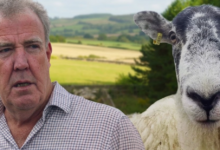
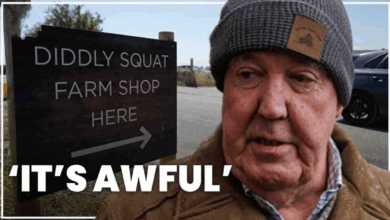
Clarkson’s latest remarks build on his earlier criticisms of Starmer, particularly regarding the Prime Minister’s stance on farming. In a recent interview with Times Radio host Peter Caldwell, Clarkson confirmed that Starmer remains barred from his pub, The Farmer’s Dog. “Oh god, yes. I hate very few people in life, but I do hate that man. He’s awful,” Clarkson said, accusing Starmer of being dismissive about the challenges faced by farmers. “He’s just so flippant about farmers. Whenever you ask him, it’s just like, well, who cares about them?” Clarkson’s frustration reflects his deep connection to the agricultural community, a theme central to his Amazon Prime series, Clarkson’s Farm.

Harriet Cowan: The Rising Star of Clarkson’s Farm
In addition to his political commentary, Clarkson’s Amazon Prime series has introduced a new face to its audience: Harriet Cowan, a farmer and nurse from Derbyshire who joined Clarkson’s Farm in its fourth season. Stepping in as a temporary replacement for farm manager Caleb Cooper, Cowan quickly won over fans with her humor, hands-on farming expertise, and authentic approach. Her appearance on the show has sparked widespread calls for her to become a permanent fixture.
Cowan, who was raised on her family’s livestock farm in Derbyshire, brings a lifetime of agricultural experience to the series. Despite studying nursing at the University of Derby and working as a community nurse in Belper, she has remained deeply involved in farming. Her seamless integration into Clarkson’s Farm came about through a recommendation from Charlie Ireland, the show’s agronomist and land agent since its first season. Ireland suggested Cowan as a replacement for Cooper, who was unavailable due to a tour, recognizing her extensive farming background.
Remarkably, Cowan joined the show without having watched it beforehand, a fact she shared during an interview with Clarkson’s daughter, Emily, on the podcast Should I Delete That?. “I don’t watch television,” Cowan explained, noting that her busy life as a farmer and nurse leaves little time for TV. She admitted that her initial impression of the show, based on its trailer, was that it seemed “fake,” but she quickly discovered its authenticity. Her lack of familiarity with the series—and with Clarkson himself—allowed her to approach the role with a fresh perspective. “Jeremy was no different. He’s the same as every other farmer I know,” she told the BBC, describing Clarkson as just another farmer in a flat cap and check shirt.

Cowan’s authenticity and expertise have made her a standout on Clarkson’s Farm, and she is now leveraging her newfound fame to advocate for greater representation of women in farming. Signed with Offlimits Entertainment, a prominent UK talent agency, Cowan is poised to pursue a career in showbiz while continuing to promote British agriculture. “Just because I’m a small blonde that likes to curl her hair and wear makeup, it doesn’t mean I can’t be a farmer,” she told the BBC. Challenging stereotypes, she aims to highlight the contributions of women in the industry, noting that women have historically played significant roles in farming, particularly during wartime.
As Clarkson’s Farm continues to captivate audiences since its premiere in June 2021, it has elevated the profiles of farming enthusiasts like Caleb Cooper, Charlie Ireland, and Gerald Cooper. Harriet Cowan’s addition to the cast has further enriched the series, offering viewers a glimpse into the realities of farming while showcasing her determination to reshape perceptions of the industry. With her blend of expertise, charisma, and advocacy, Cowan is quickly becoming a new face of British farming, using her platform to inspire and educate.
Clarkson’s outspoken views and the rise of figures like Cowan underscore the cultural impact of Clarkson’s Farm, which continues to spark conversations about agriculture, leadership, and societal change. As Clarkson critiques the political landscape and Cowan champions women in farming, both are leaving their mark on their respective fields, resonating with audiences far beyond the Cotswolds.