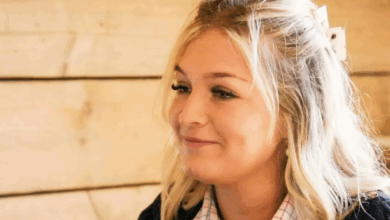
HEALTH UPDATE REVEALED: Jeremy Clarkson’s Recovery After Heart Surgery — How Is He Healing and Will He Make a Full Recovery?
From Heart Surgery to Healthy Living: Clarkson’s Life After a Wake-Up Call

Following a serious health scare that forced him to confront his own limitations, Jeremy Clarkson has begun reshaping his lifestyle in ways that few would have expected from a man once defined by excess and unpredictability. After undergoing emergency heart surgery in 2024, Clarkson has not only reflected on his mortality but has also taken tangible steps toward improving his long-term health—marking a significant turning point in both his personal life and public image.
For years, Clarkson was known for a lifestyle that leaned heavily into indulgence, often joking about his love for rich food, alcohol, and a general disregard for moderation. However, the reality of a major medical procedure appears to have shifted that mindset. In recent updates, he revealed that he has adopted a healthier diet, focusing on more balanced nutrition and cutting back on habits that may have contributed to his condition. The results have been noticeable, with Clarkson reportedly losing a significant amount of weight—a physical transformation that reflects a deeper, more meaningful change.
This shift is not simply about appearance or short-term recovery. It represents an attempt to regain control over a body that, for the first time, has imposed clear boundaries. Health, once taken for granted, has now become a central concern. And while Clarkson continues to approach life with his trademark humor, there is a growing sense that his decisions are now guided by a more pragmatic awareness of what is sustainable.
A key part of this new chapter is his connection to Diddly Squat Farm, the rural setting that has become both his workplace and a symbol of his transformation. Documented in the widely successful Clarkson’s Farm, the farm has provided Clarkson with more than just a new business venture—it has offered a completely different pace of life, one that contrasts sharply with his previous high-speed career in television.
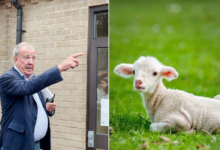
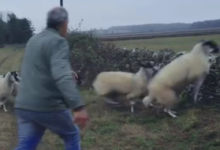
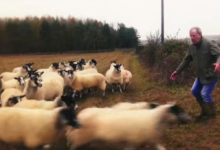
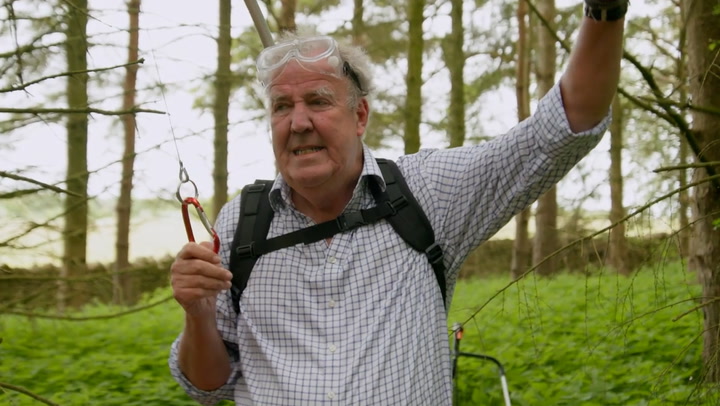
At Diddly Squat, Clarkson is no longer just a presenter observing the world around him; he is an active participant in a demanding and often unforgiving environment. Farming, as he has discovered, is not only physically taxing but also mentally challenging, requiring constant adaptation to weather conditions, regulations, and market pressures. This immersion has deepened his understanding of the agricultural sector, allowing him to speak with authenticity about the struggles faced by farmers across the UK.
In many ways, the farm has become a space for reinvention. The physical labor involved—whether managing crops, tending to animals, or maintaining the land—has contributed to his more active lifestyle. Unlike structured exercise routines, this form of activity is integrated into daily life, offering both health benefits and a sense of purpose. It is a stark departure from the sedentary aspects of his previous work, and one that aligns closely with his broader effort to improve his well-being.
Beyond the physical changes, Clarkson’s experience has also influenced his perspective. Through Clarkson’s Farm, he has emerged as an unexpected advocate for the farming community, using his platform to highlight issues that often go unnoticed by the general public. From fluctuating commodity prices to complex regulatory frameworks, the challenges he faces on his own land mirror those encountered by farmers nationwide. His willingness to engage with these topics has added a new dimension to his public role, shifting him from entertainer to commentator on real-world issues.
This evolution has resonated with audiences, many of whom see his journey as both relatable and instructive. The idea that a life-altering event can prompt meaningful change is not new, but Clarkson’s case is particularly compelling because of how visible that transformation has been. Through his writing and television work, viewers are able to witness not just the outcomes, but the process itself—the struggles, the adjustments, and the постепенное shift in priorities.
At the same time, it would be simplistic to suggest that Clarkson has completely abandoned his old self. His humor, his outspoken nature, and his tendency to challenge convention remain intact. What has changed is the context in which those traits operate. They are now balanced by an awareness that was previously absent—a recognition that even the most resilient individuals are not immune to the consequences of their choices.
Looking ahead, the question is not whether Clarkson will continue this healthier path, but how it will shape the next phase of his life. Will the farm remain the center of his activities, or will he find new ways to integrate his experiences into future projects? And perhaps more importantly, will this balance between health, work, and personal fulfillment prove sustainable in the long term?
What is clear is that the events of 2024 have left a lasting impact. They have prompted a reassessment, not just of habits, but of priorities. In moving from heart surgery to a more health-conscious lifestyle, Jeremy Clarkson has demonstrated that change, even when forced by circumstance, can lead to unexpected opportunities for growth.
And in that transformation lies a broader message—one that extends beyond a single individual. It is a reminder that sometimes, it takes a moment of crisis to reveal what truly matters, and that the path forward, while uncertain, can still lead to something better.