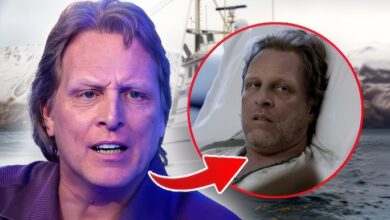
Wizard Loses All Steering in Treacherous Bering Sea Storm – Can the Crew Regain Control Before Disaster Strikes?
Wizard Loses All Steering in Treacherous Bering Sea Storm – Can the Crew Regain Control Before Disaster Strikes?

More than 690 miles southwest of the mainland and deep on the western Bering Sea grounds, the crew of the F/V Wizard faced a high-stakes emergency when their steering system failed in building seas, forcing a dramatic improvised repair that tested both seamanship and nerve. The veteran crab vessel, featured on Deadliest Catch, was pushing hard to finish a punishing stretch of fishing before racing north for the upcoming Opilio season when the crisis struck without warning. With 100,000 pounds still to catch after wrapping up the Western district slugfest, Captain Keith Colburn’s schedule left no margin for mechanical failure, yet heavy weather and relentless current quickly turned a routine transit into a dangerous drift as the autopilot cut out and the rudder stopped responding. In steepening seas near the boundary line separating the Eastern and Western districts, the boat began getting shoved around by wind and tide, and within moments the bridge crew realized they had lost steering control entirely.
Initial checks revealed that the steering motor was overheating to the point of being untouchable, with both units running dangerously hot. In rough offshore conditions, a disabled rudder can escalate from inconvenience to catastrophe in minutes, particularly on a heavily loaded crabber vulnerable to broaching in quartering seas. With no immediate steering response available from the hydraulic system, the crew weighed options while the vessel continued to yaw unpredictably. A replacement motor was onboard, but installing it would take hours in cramped quarters below deck, time the boat did not have if it could not maintain some directional control. The only immediate solution was to bypass the failed system and physically manipulate the rudder post from within the steering compartment.

Marine engineer Joe Serpus located access to the top of the rudder post, a placement dating back to the Wizard’s World War II–era construction that now proved unexpectedly advantageous. Just six inches beneath a galley bench, the exposed post offered a narrow opportunity for a manual workaround. With welding gear brought to bear and tools hastily assembled, Joe fabricated a makeshift tiller arm that could be clamped onto the rudder shaft. The plan was simple in theory but daunting in execution: steer the 150-foot crabber by hand from inside the galley while the new motor was installed below. In rolling seas, with pots stacked on deck and crew members already fatigued, the margin for error was thin.

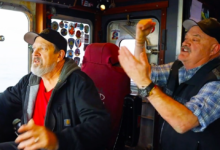
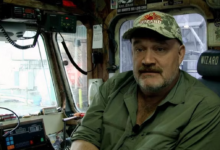
As sparks flew from welding work and the smell of hot metal filled the interior, deckhands braced themselves to act as human steering hydraulics. Orders came down from the wheelhouse in degrees rather than turns of a wheel. “Slowly pull it to port,” came the call, followed by constant corrections as the boat responded sluggishly to manual input. Steering even a few degrees required coordinated muscle, and the confined space made leverage awkward at best. Yet remarkably, the improvised system began to hold the vessel on a roughly steady heading. With the Wizard pointed into the weather to minimize broaching risk, the crew continued to shove pots and maintain operations while hand-steering through heavy swell. The scene underscored both the fragility of modern systems and the enduring value of mechanical ingenuity when electronics fail.
While the makeshift tiller kept the boat controllable, Joe turned his attention to diagnosing the electrical fault that had triggered the overheating motors. The suspicion centered on vibration-related failure within the control box, potentially aggravated by relentless pounding in rough seas. Meanwhile, time pressure mounted. The fleet was racing against cannery deadlines, and every lost hour threatened quota targets and revenue. Beyond that loomed the imminent transition to Opilio crab fishing, requiring repositioning and crew readiness. The Wizard could not afford extended downtime hundreds of miles from port.

Approximately 150 miles north of Dutch Harbor, the vessel pressed on under jury-rigged control as troubleshooting continued. Hand steering in heavy weather is exhausting and imprecise, yet the crew managed to maintain enough stability to finish their final Bairdi string. The effort reflected a blend of urgency and discipline, with deckhands responding instantly to shouted adjustments while keeping safety foremost amid swinging gear and slick decks. At one point, miscommunication nearly sent the rudder the wrong way, a reminder of how quickly small errors compound at sea. Nevertheless, the system held together long enough for Joe to complete repairs on the steering control box and test the replacement motor installation.
When the call came to initiate a systems check, tension on the bridge was palpable. A restored hum from the steering assembly signaled that the electrical fault had been isolated and corrected. Further testing confirmed responsive rudder movement without overheating. The relief was immediate and visible; what could have devolved into a full-blown maritime emergency ended instead as a testament to preparation and improvisation. The enforced slowdown even allowed fishing gear additional soak time, potentially boosting catch totals at a moment when every pound counted.
For Captain Colburn and his crew, the episode served as a stark reminder that in the Bering Sea, mechanical reliability is as vital as quota strategy. The Wizard’s wartime-era design, once simply historical trivia, proved instrumental in enabling manual control when modern systems faltered. As the vessel turned its focus back to meeting delivery deadlines and preparing for Opilio season, the crew carried forward not only their catch but the hard-earned knowledge that resilience at sea depends on redundancy, teamwork, and the ability to innovate under pressure. In waters where weather, distance, and time conspire against even the most experienced mariners, that combination can mean the difference between disaster and safe passage.