Gerald Cooper Is Being Targeted by Fake News – But How Much Real Damage Has It Actually Done to Him?
Gerald Cooper Is Being Targeted by Fake News – But How Much Real Damage Has It Actually Done to Him?

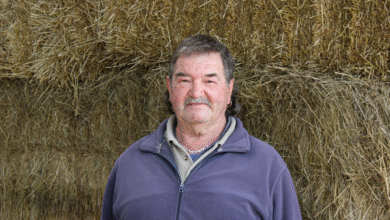
Gerald Cooper isn’t just being targeted by fake news — he’s being genuinely hurt by it. That is the emotional core of Jeremy Clarkson’s latest outburst, and it’s why his words land differently this time. Clarkson, who is usually seen as the sharp-tongued, unbothered face of Clarkson’s Farm, is not speaking up simply to complain about internet nonsense or protect his own reputation. He is speaking up because Gerald is scared, not for himself, but for what his children might read, believe, and carry with them. In a world where artificial intelligence can manufacture “proof” with a single click, the damage is no longer theoretical. It is personal, and it is happening to someone who never asked to become famous in the first place.
The story begins with the modern internet’s most dangerous weapon: believable lies. In recent days, Clarkson revealed that a wave of AI-assisted misinformation has been spreading across social media, with posts claiming dramatic events at Diddly Squat Farm — Gerald has died, Kaleb has had another child, Lisa has left Jeremy, Jeremy has broken his leg — and all of it presented with images realistic enough to fool casual readers. This isn’t the old era of obviously fake headlines and blurry photos that could be dismissed with a laugh. This is the era of deepfakes and AI-edited pictures that look “right” at first glance, the kind of content that spreads fast because it feels real. And the faster it spreads, the harder it becomes to correct, because outrage and shock always travel farther than a quiet denial.
What makes this situation more unsettling is that the real victim is not the celebrity at the centre of the show, but the ordinary man who became a household name almost by accident. Gerald Cooper was never introduced to viewers as a star. He was introduced as part of the farm’s reality — a familiar face, a steady presence, a man who worked hard and spoke in a way that was so deeply local it often required subtitles. Fans loved him not because he chased attention, but because he didn’t. His humour, his authenticity, and his unfiltered way of being himself turned him into a breakout favourite. Yet that kind of fame is fragile, because it’s built on the idea that the person remains “real,” while the world around them becomes increasingly unreal.

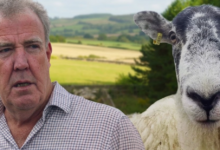
This is where the emotional shift in Clarkson’s response becomes important. Jeremy Clarkson has built an entire career on being provocative. He is famous for sarcasm, confrontation, and the kind of blunt commentary that rarely pauses to consider how it lands. Even on Clarkson’s Farm, the show thrives on his chaos, his impatience, his stubbornness, and his endless ability to turn a small rural problem into a dramatic war against the universe. But in this moment, Clarkson isn’t leaning into that persona for entertainment. He is stepping into a different role: the one who protects the people around him, especially the ones who are least equipped to defend themselves in public.
Clarkson’s anger is sharp, but it isn’t empty. It is rooted in the fact that Gerald is “unused to being in the public eye,” and the attention now comes with a new kind of threat. Gerald is not worried because strangers are gossiping about him. He is worried because his children might see their father declared dead online, might see disturbing lies dressed up as facts, and might carry that fear into their lives. The cruelty of fake news is not only that it deceives strangers, but that it forces families into a cycle of constant reassurance. Every fake post becomes a conversation at home. Every rumour becomes a moment of panic, confusion, or embarrassment. And when the target is someone who has already faced serious health challenges, the stakes become even heavier. A lie about illness or death is not just a lie — it is a weapon aimed at the most vulnerable emotional space a family has.
The deeper issue is that this isn’t a “celebrity problem” anymore. It is the problem of ordinary people being pulled into public visibility without any protection. Gerald Cooper is, at his core, a working man on a farm. The show made him famous, but it did not change the fact that he has a family, a private life, and a limit to how much public attention he can carry. The public often forgets that fame does not come with training, armour, or emotional preparation. When a pop star faces rumours, there are managers, PR teams, and media systems designed to respond. When a farmhand faces rumours, there is often only silence, confusion, and the stress of feeling exposed. The internet doesn’t care about that difference. It treats everyone as content.

This is why the “fame” storyline becomes so bitterly ironic. Clarkson’s Farm has always been framed as a story about rural life meeting modern reality. It shows how farming is pressured by weather, government rules, markets, and unpredictable disasters. But now, another modern force has entered the farm: AI-generated misinformation. It’s not a tractor breaking down or a sheep escaping. It’s a digital storm that can’t be fenced off, and it can reach straight into the home. The farm may be physically isolated, but online it is more exposed than ever, and the people who work there are suddenly vulnerable to strangers who treat them like characters in a game.
The frightening part is how little effort it takes to cause harm. Someone with a phone and an AI tool can create a convincing fake photo, attach it to a dramatic headline, and watch it spread. Social media platforms reward this behaviour, not because they support cruelty, but because their algorithms are built to amplify whatever triggers emotion. Shock, grief, scandal, betrayal — these are the most profitable emotions online. The result is a system where lies are not accidents, they are strategies. And the people caught in the middle are left cleaning up damage they did not create.
Clarkson’s plea, then, is not simply a rant. It is a warning, and it’s also a rare moment of tenderness from a man who usually hides behind humour. He is effectively saying: this is not funny, because it is hurting someone who didn’t ask for this life. Gerald didn’t chase fame, but fame found him anyway, and now it is dragging his family into a space where strangers can rewrite reality at will. Clarkson’s protective stance reveals something that viewers of the show have sensed for years beneath the jokes and arguments: the farm is not just a workplace, it is a team, and when one member is threatened, the others feel it.
In the end, the story of Gerald Cooper being targeted by AI-driven fake news is not just another headline about misinformation. It is a snapshot of what happens when the boundary between private life and public entertainment collapses. A normal farmer becomes a beloved face on television, and then becomes a target online. The fame that once felt harmless becomes heavy, because it invites people who don’t care about the human cost. And Jeremy Clarkson, the man known for being “gai góc” and constantly teasing everyone around him, finds himself doing something unexpected: standing in front of the noise and saying, loudly, that enough is enough.