Rare Rosehead Spike Discovered on Oak Island — Could This 500-Year-Old Nail Prove European Contact?
Ancient Rosehead Spike Unearthed on Oak Island — New Find Fuels 500-Year Mystery

Oak Island, Nova Scotia — The mystery that has captivated treasure hunters, historians, and millions of viewers worldwide has taken another intriguing turn. During the latest excavation on Lot 15, the Oak Island team uncovered a rare rosehead spike — a hand-forged fastener that may date as far back as the 16th century. The find has sent ripples of excitement through the Fellowship, adding yet another piece to the complex puzzle of who may have visited or worked on the island long before the Money Pit was first discovered in 1795.
The discovery took place during a metal-detecting operation led by veteran detectorist Gary Drayton, working alongside Rick Lagina and Steve Guptill. As Gary swept the hillside — recently plowed to bring artifacts closer to the surface — his detector sounded off with a high-toned alert. Digging just a few inches beneath the disturbed soil, Gary gently lifted a small iron object encrusted with age.
“What we got here?” Gary asked as he brushed away dirt. “You see those facets?”
Rick and Steve leaned in, instantly recognizing the distinctive hammered shape.



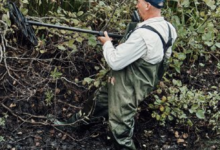
“I wonder if that’s a rosehead spike,” Gary added. “Could well be.”
It was. And to the team, this was no small discovery.
A Fastener with a Fascinating Past
Rosehead spikes are not ordinary nails. First crafted in the 1500s, these iron fasteners were meticulously hand-forged by European blacksmiths. Each was hammered into four tapered sides, forming a head resembling the layered petals of a rose — a feature that gave the spike its name.
These spikes were typically used in:
-
Shipbuilding
-
Construction of early wooden structures
-
Reinforcement of crates, chests, and heavy beams
Their presence on Oak Island is especially significant because they predate industrial-era nails by centuries. Machine-made nails became widespread only after the late 1700s, meaning any rosehead spike found on the island is almost certainly older than the Money Pit discovery itself.
“Rosehead spikes like this can go all the way back to the 1500s,” Gary explained. “We’ve found some before — even deep in the Money Pit.”
Indeed, rosehead spikes have appeared in two major contexts on Oak Island:
-
Near the surface, especially in areas showing signs of early settlement or activity.
-
More than 150 feet deep in the Money Pit, embedded in layers believed to date to the early 1700s — or possibly earlier.
All tested samples so far have been dated to before 1750, making them one of the earliest physical clues tied to possible depositor activity on the island.

Why Lot 15 Matters
The discovery occurred on Lot 15, one of the most artifact-rich zones outside the Money Pit itself. In recent seasons, the team has recovered:
-
Charcoal that may date to the 14th century
-
A Chinese coin possibly more than 1,000 years old
-
A Portuguese stoneshot linked to the Azores Islands
-
Tools, iron fragments, and a scattering of early cultural artifacts
Seeing these finds clustered together on the team’s newly created heat map highlighted Lot 15 as a high-potential zone for early European activity. Plowing the area was an intentional — and somewhat experimental — attempt to bring deeper objects to the surface, inspired by Gary’s years of detecting plowed farmland in England.
The result? Within minutes, yet another centuries-old artifact emerged.
Could the Spike Be Connected to the Money Pit?
Rosehead spikes hold special significance because they’ve been found both on the surface and deep underground. While surface finds can be explained by early settlers or later searchers, the spikes recovered at great depths inside engineered wood layers raise far more questions.
If the spike from Lot 15 matches the metallurgy or style of those deeper Money Pit spikes, it could support a tantalizing theory:
The same group that worked deep beneath the Money Pit may have also conducted operations on Lot 15.
Rick Lagina commented on this possibility as the spike was bagged and recorded:
“We’ve seen rosehead spikes many times on Oak Island, especially connected to old features and old areas. These are valuable finds. We could have a connection here between Lot 15 and the Money Pit.”
For a team that has spent more than a decade chasing evidence of pre-18th-century construction on Oak Island, this connection is nothing short of thrilling.

Adding Another Piece to the Puzzle
With the artifact now headed for conservation and analysis by the team’s archaeological partners, more information may soon emerge:
-
Its exact age
-
The type of iron used
-
Whether it was forged locally or overseas
-
Its possible function
Each new test result could help narrow down which groups — from Portuguese explorers, to English builders, to French privateers — may have visited Oak Island long before modern treasure hunters.
As Steve noted while marking the find’s location:
“This is going straight on the heat map.”
And on Oak Island, where patterns matter as much as individual artifacts, a single spike can shift the entire direction of the search.
For Now, Hope Remains High
As Gary tucked the spike into an evidence bag, Rick summed up the moment with simple enthusiasm:
“It’s brilliant.”
It may be small. It may be rusty. But in the ongoing saga of Oak Island, a centuries-old rosehead spike is more than a nail — it’s another clue in a 500-year-old mystery that refuses to let go.
And the heat on Lot 15? It might just be getting started.