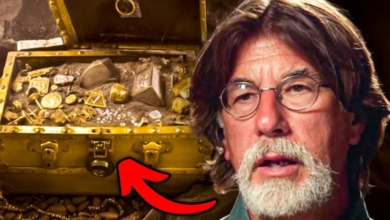
The Curse of Oak Island Team Unearths Ancient Firearm Piece in Season 13 — Could This Weapon Fragment Solve the Island’s 200-Year Mystery?
Ancient Firearm Fragment Found in Oak Island Swamp: Could It Rewrite the Island’s Timeline?
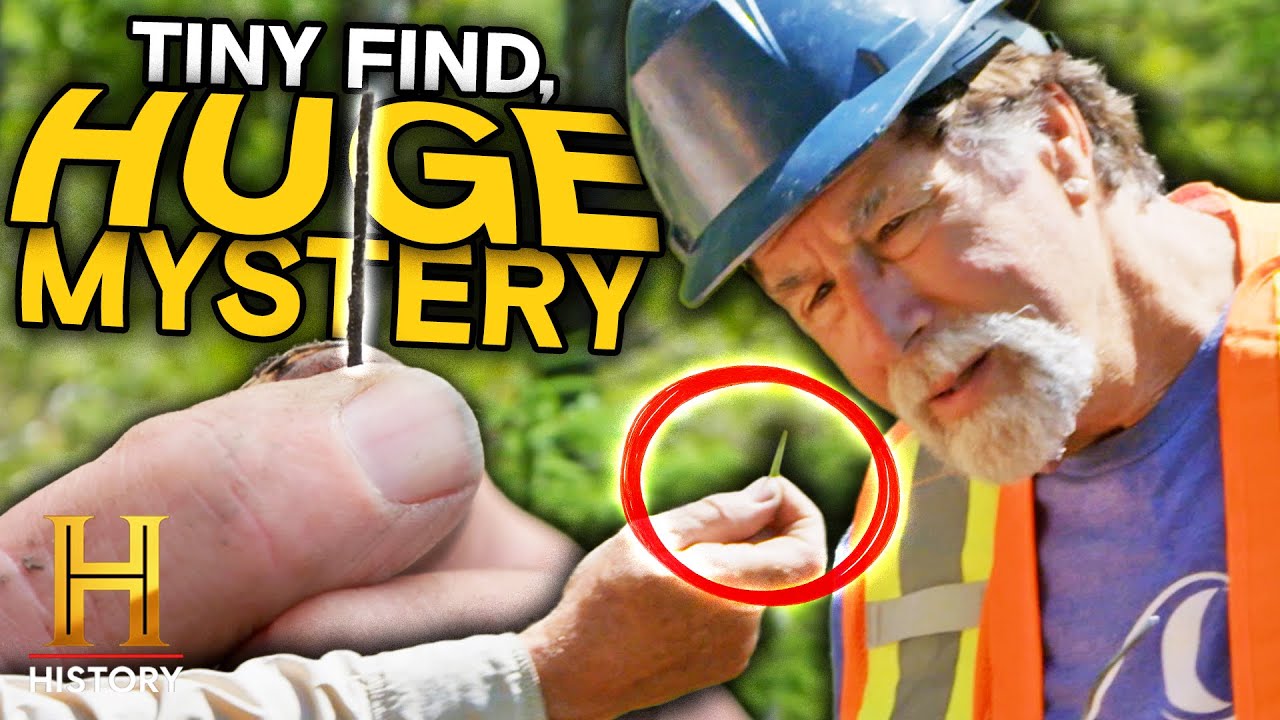
A newly analyzed artifact from the Oak Island swamp may represent one of the most significant discoveries in the history of the long-running treasure hunt. On this week’s episode of The Curse of Oak Island, Rick Lagina, accompanied by his brother Marty, archaeologist Laird Niven, and metal-detection expert Gary Drayton, returned to the Oak Island research lab to uncover the truth behind a mysterious iron fragment pulled from the western edge of the swamp—an object that may be centuries older than previously believed.
The fragment, recovered by Rick, Billy Gerhardt, and Gary Drayton near the paved stone area, immediately raised eyebrows due to its unusual shape. What first appeared to be a weight slowly began to reveal tapered edges and a hollowed structure. Gary floated an exciting possibility: could this be part of a hand cannon, one of the earliest firearm designs used worldwide?
A Weapon From the 12th to 15th Century?
Hand cannons—also known as “hand gonne”—date back to the 12th century in China and are widely considered the world’s first true portable firearms. Variants spread into the Middle East and Europe through the 14th century before disappearing from common use by the 1500s. If the artifact truly represents a portion of such a weapon, its age could predate the Money Pit legend by well over a century.
Inside the lab, metallurgical expert Emma Culligan began breaking down the artifact’s physical composition. Analyzing swamp finds is notoriously difficult due to mineral contamination, but several clean sample points revealed something extraordinary: the metal carried very few impurities and showed a natural sulfur spike consistent with pre-modern forging techniques. Emma concluded that the item was not created in a modern blast furnace, strongly indicating a European origin and potentially dating to the 1600s or earlier.


Archaeologist Laird Niven reinforced the significance of this finding. “By the 1500s, hand cannons were already going out of fashion,” he noted. “If that’s what this is, it pushes our possible timeline back considerably.”

CT Scan Reveals a Critical Feature
To confirm their suspicions, Emma conducted a CT scan of the artifact—a tool that has become a vital part of the island’s modern investigation. The scan revealed a small but crucial detail: a touch hole, the ignition point where early gunners would insert a smoldering match to ignite powder inside the chamber.
Gary immediately recognized the feature. “That’s a touch hole, plain as day. That’s where you light the charge.”
The discovery electrified the team. Rick Lagina, typically measured, couldn’t hide his excitement. “This is something that deserves a firearms expert’s analysis,” he said, visibly energized. The possibility that someone carried and fired early weaponry on Oak Island centuries ago adds a gripping new chapter to the ongoing mystery. If this relic truly originates from medieval or early Renaissance Europe, its presence suggests activity on the island far earlier than the commonly theorized 1700s expeditions.
A Productive Dig Continues in the Swamp
Following the lab session, Gary, Billy, and Derek returned to the western swamp to continue searching for more clues. Their metal detectors quickly yielded additional artifacts, reinforcing the belief that this area holds major historical significance.
The first find was a small iron nail—ordinary at first glance, but likely hand-forged and old. Then the team located a much heavier, deeper-lying iron object with sharp angles and intentionally crafted edges. Its weight and shape indicated deliberate manufacture, not random scrap.
Gary theorized it could be a portion of an iron buckle—possibly from a large chest or crate. The idea immediately sparked speculation: could it be related to containers used to transport valuables, tools, or even treasure? And could such artifacts be tied to the nearby corduroy-style road found in past seasons?
Even longtime swamp skeptic Marty Lagina took notice. “If someone wanted to hide treasure,” he said, “flooding it under swamp conditions would be ideal. You’d erase every sign you were ever there.”
The discovery of the buckle-like object and the small iron needle, both recovered from significant depth, supports the notion that this section of the swamp was once a site of intentional human activity. Whether connected to shipping, construction, or treasure concealment, the pattern is becoming harder to dismiss as coincidence.

What Comes Next
The mood among the team is one of renewed determination. Rick urged the dig crew to continue their systematic search: “Leave no stone unturned,” he said, emphasizing that the swamp, once considered a muddy obstacle, is now proving to be one of Oak Island’s richest archaeological locations.
Gary, never one to hide his enthusiasm, agreed immediately. “We should aim to find more,” he grinned. “I brought plenty of bags today.”
As the team prepares to send the hand cannon fragment to outside experts for verification, anticipation builds across the island. If confirmed, the artifact may represent one of the earliest pieces of European weaponry ever found in Atlantic Canada—and a clue that could rewrite Oak Island’s timeline entirely.
For now, one thing is certain: the swamp is far from finished revealing its secrets.