Oak Island Team Unearths 2,000-Year-Old Coin in Discovery — Does This Finally Prove the Treasure Legend is Real?
What Does This 2,000-Year-Old Coin Mean? Oak Island Team Stunned by New Ancient Discovery

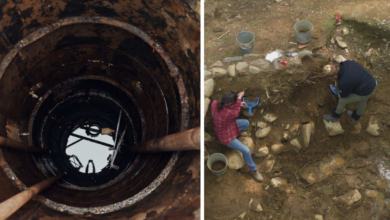
A new layer of mystery has unfolded on The Curse of Oak Island, as the Lagina brothers and their team examine what may be one of the most significant ancient artifacts ever unearthed on the island—a Roman coin potentially dating back nearly 2,000 years. The discovery, made on Lot 5, has reignited long-standing theories about early visitors, medieval secret societies, and the origins of the island’s legendary treasure.
A Bright Morning—and a Major Reveal
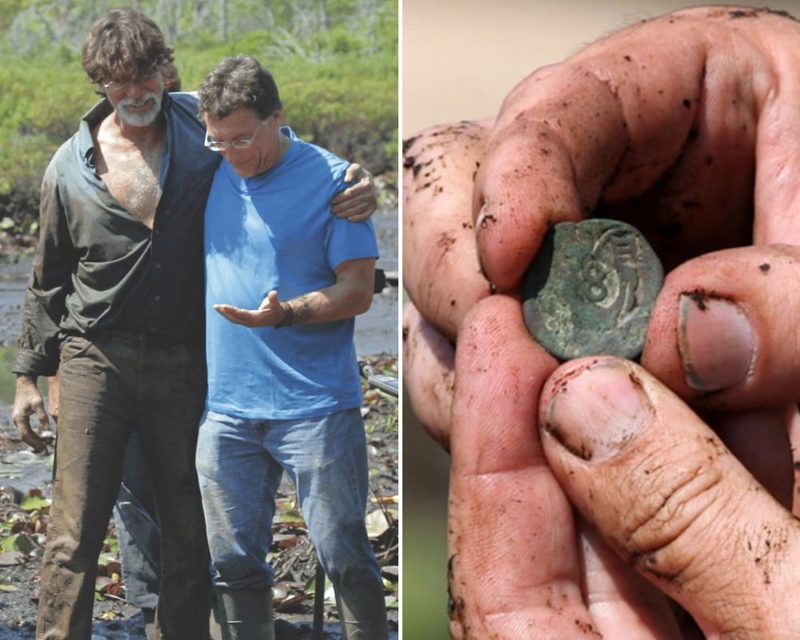
In the episode, Rick and Marty Lagina, joined by researchers Katya Drayton, Gary Drayton, Emma Culligan and other team members, gather inside the Oak Island laboratory to analyze a mysterious coin discovered one week earlier. The object was found by Marty and Katya on Lot 5, the same area where the team had previously unearthed five Roman coins believed to date back as far as the 3rd century.
“There’s something really special here,” Katya said, as she prepared to reveal the results of a CT scan performed on the artifact. Moments later, images of the coin’s interior details lit up the screen—prompting gasps around the room.
“That’s ancient,” Gary Drayton reacted as the coin’s markings became visible.



A Roman Emperor Emerges From the Past
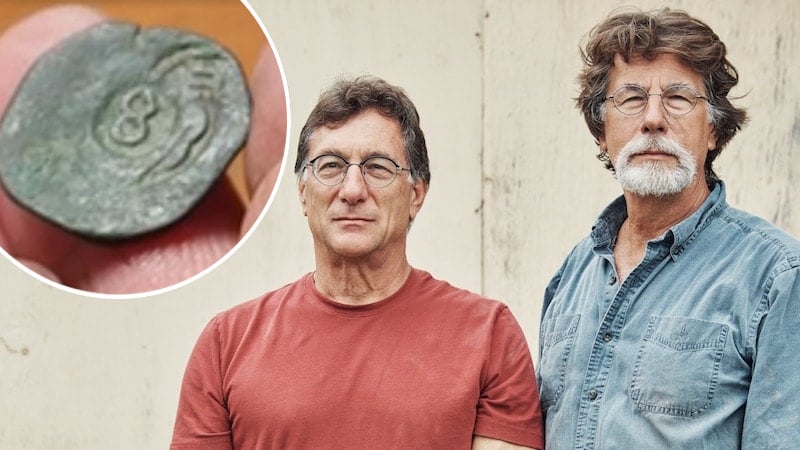
Archaeometallurgist Emma Culligan explained that the coin’s imagery was remarkably clear for an object buried for centuries. One side revealed a standing figure accompanied by the abbreviated Latin “officina N,” indicating it was minted in the “ninth workshop.” Although the precise region could not be determined due to a missing mint mark, the design matched Roman minting conventions.
The reverse side offered an even more striking clue. The head bust featured a pointed nose, sharp chin, and what appeared to be a radiate crown.
“These features, you only see them with Claudius II,” Emma confirmed, identifying the emperor who ruled Rome from AD 268–270.
Marty’s reaction was immediate: “So this is a Roman coin?”
“Without a doubt,” Emma replied.
A New Layer to the Oak Island Mystery
The Oak Island team has never discovered habitation evidence from the Roman era. The presence of not one, but now six Roman coins raises a question that both excites and perplexes researchers: How did ancient Roman currency end up buried in Nova Scotia?
Rick Lagina suggested the possibility that the coins may be directly connected to whatever treasure or cache was hidden centuries ago. Marty agreed that determining when these coins were deposited is now a key priority.
“Sandy Campbell needs to see this,” Rick said, referring to the team’s trusted coin expert. “This could change everything.”
More Clues Appear on Lot 5
While the lab team celebrated their breakthrough, archaeologists Fiona Steele and Tansy O’Connor continued excavations several hundred yards away on the same lot. The area has produced a diverse collection of artifacts over recent seasons—indicating that different groups may have used the land for various activities over multiple centuries.
During their digging, Tansy uncovered a large fragment of pottery. Moments later, the rest of the bowl emerged from the soil in two sizable pieces. When assembled, the fragments revealed an ornate earthenware vessel.
“This could be anywhere from 1600 to 1800,” Fiona explained, noting the bowl’s craftsmanship and utilitarian design. “It was likely used for food preparation—breads, fruits, preserves.”
No historical records document any settlers living on Lot 5 during that period. If Fiona’s dating is correct, the pottery may offer another important indicator of who might have visited the island long before treasure hunters arrived.
Expert Identifies the Coin—and Raises Big Questions
Back in the research center, Rick and Doug Crowell met with numismatic expert Sandy Campbell to review the Roman coin. Campbell, who has evaluated artifacts from Oak Island for years, immediately recognized its origin.
“This is clearly Roman Empire period,” he confirmed. “And it’s in remarkable condition for a coin buried this long.”
Campbell emphasized that Roman coins have not been previously found elsewhere in Nova Scotia.
“I’m puzzled how so many Roman coins could land on this island,” he admitted. “The big question is: Who brought them?”
He explained that Roman coins continued to circulate as currency in Europe into the 1500s—and even later in some regions. Traders, explorers, or medieval groups could easily have carried them across continents.
“It was real monetary value,” he said. “Any merchant would accept it.”
Doug Crowell suggested a new possibility: the workers who constructed the Money Pit centuries ago may have carried such coins in their pockets. Campbell agreed this was plausible.
Connections to the Knights Templar?
Doug pointed out that Roman coins frequently appear at sites associated with the medieval Knights Templar—a recurring subject in Oak Island research. The team recalled encounters with similarly dated Roman artifacts during their investigations in Iceland, France, Portugal, and Scotland.
Rick emphasized that these discoveries must be considered with an open mind.
“The clues may all be connected,” he said. “But we need irrefutable proof.”
The Mystery Deepens
Campbell left the island calling the discovery “bizarre, fascinating, and deeply mysterious.” Rick agreed.
“Every new find makes you think someone was here long before we imagined,” Rick said. “And it might be tied to the treasure.”
With the discovery of yet another Roman coin—possibly 1,700 to 2,000 years old—the Oak Island story grows more complex. And as the team continues digging on Lot 5, each artifact may bring them one step closer to understanding who hid something on Oak Island… and why.