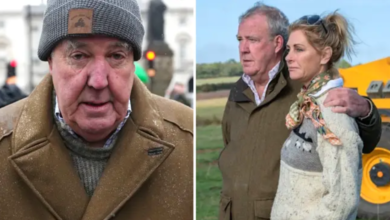
Jeremy Clarkson Quells Fears Over ‘Break’ with Optimistic Clarkson’s Farm Update: ‘The Show Goes On’
Jeremy Clarkson Quells Fears Over ‘Break’ with Optimistic Clarkson’s Farm Update: ‘The Show Goes On’
Jeremy Clarkson, the acerbic motoring icon turned reluctant farmer, has once again proven why he’s the king of blunt honesty and unexpected heart. In a candid column for The Sun this week, the 65-year-old addressed swirling rumors about the future of his smash-hit Prime Video series Clarkson’s Farm, confirming a much-needed “break” after the upcoming fifth season—but leaving the door firmly ajar for more chaos at Diddly Squat Farm. Fans, who have binge-watched the show into a global phenomenon since its 2021 debut, can breathe a sigh of relief: while the cameras are packing up for now, Clarkson hints that a sixth season is “likely,” provided the editing wizards can mine enough mishaps from the footage.
The update comes at a pivotal moment for the series, which has racked up over 100 million viewing hours worldwide and earned Clarkson a legion of new fans far beyond his Top Gear and The Grand Tour days. Clarkson’s Farm chronicles the former BBC presenter’s fish-out-of-water foray into agriculture on his 1,000-acre Cotswolds estate—a sprawling patchwork of fields, woodland, and livestock that he impulsively purchased in 2008 as a retirement punt, only to discover farming is about as forgiving as a racetrack with no brakes. What started as a vanity project has evolved into a masterclass in rural resilience, blending laugh-out-loud blunders with sobering insights into Britain’s beleaguered agricultural sector.
At the heart of the show’s appeal is Clarkson’s prickly camaraderie with his young farm manager, Kaleb Cooper, the 27-year-old agricultural whizzkid who serves as both mentor and comic foil. Their bickering—Clarkson forever the posh novice fumbling with machinery, Cooper the straight-talking local lad dispensing wisdom with a side of sarcasm—has become TV gold. “Kaleb’s like a son I never wanted but can’t live without,” Clarkson quipped in a recent interview. Season four, which premiered in May and drew record-breaking audiences, even gave fans a taste of life without Kaleb when he jetted off on a sold-out UK tour promoting his bestselling books. In his stead, the spotlight fell on the equally capable (and camera-shy) farmhand Harriet Cowan, 24, whose no-nonsense approach to everything from lambing to livestock wrangling injected fresh energy into the mix.

But whispers of an impending end had fans on edge. Back in May, Clarkson dropped a bombshell in The Times, revealing that the production team—exhausted after five relentless years of filming two to three days a week—would be hitting pause after season five. “Whatever happens, we’ll definitely take a short break as the crews are all worn out,” he said at the time, cryptically adding that a sixth series would only greenlight “if there was a reason for doing it, like a bloody good story.” The ambiguity sparked a frenzy on social media, with #SaveClarksonsFarm trending and petitions circulating for more episodes. One viral post lamented, “If Diddly Squat goes dark, who’s going to teach us about badgers and bureaucracy?”
Enter Clarkson’s latest dispatch from the front lines, published amid the golden hues of an unseasonably sunny Cotswolds autumn. Reflecting on the wrap of season five filming—announced with a weary group selfie around a campfire in late September—he painted a vivid picture of the season’s highs and lows. “It’s likely that the brilliant guys who edit our show will find some nuggets of humour in the mix and that there’ll be some laughs in season five,” he wrote. “And in the relentless sunshine, the Cotswolds did look fantastic. But at the coalface, it was knackering.”
The “knackering” bit? Understatement of the year. Season five, slated for an early 2026 Prime Video premiere, promises to be the most emotionally charged yet, delving into a summer of heartbreak that nearly broke the farm. In July, Diddly Squat was plunged into a two-month lockdown after a devastating outbreak of bovine tuberculosis (bTB)—the respiratory scourge that’s been decimating UK herds for decades. The disease, spread through infected badgers and cattle, forced the culling of all affected animals, including a gut-wrenching casualty: a prized cow pregnant with twins. “She had to be destroyed,” Clarkson revealed starkly in his column, his usual bombast giving way to raw frustration. “And what happens to her after that? Burned? Dissolved in acid? Nope. She goes into the food chain like any other farm animal.”

It’s a brutal reality that underscores the show’s unflinching gaze on farming’s darker side. bTB costs the British economy £100 million annually in testing, compensation, and lost productivity, with over 25,000 cattle culled last year alone. Clarkson’s outspoken on the issue—blaming government inaction and badger culls that he calls “a waste of time and money”—and season five will capture the lockdown’s toll: shuttered farm shop, idle tractors, and a team staring down financial ruin. Yet, true to form, Clarkson finds levity in the loss. Filming even paused briefly in July when a vintage Spitfire fighter plane buzzed overhead, prompting a humorous drone formation spelling out “Season 5 is coming” as a cheeky distraction.
Addressing the elephant in the field—or rather, the one not grazing due to lockdown—Clarkson tackled the break head-on. “Are we carrying on? Well, we’ve sent the cameras away to give us a break from that side of things for a while.” But then, the pivot that set hearts aflutter: “But yup. Kaleb’s out there now in his tractor, and after I’ve finished writing this, I’ll be joining him. The show goes on.” It’s a classic Clarkson sleight-of-hand—dangling uncertainty before yanking it back with defiant optimism. Insiders whisper that while the core team (including land agent Charlie Ireland, whose deadpan expertise on planning permissions rivals Clarkson’s rants, and girlfriend Lisa Hogan’s wry pub-running escapades) craves respite, the farm’s endless drama ensures more stories. Teasers suggest season five will tackle everything from experimental beekeeping gone awry to a high-stakes bid for eco-friendly diversification, all against the backdrop of Clarkson’s ongoing battles with local councils over his farm shop expansions.
The fan reaction has been electric. When Clarkson posted the season-five wrap photo on Instagram—him looking knackered amid the team’s grins—comments exploded with pleas and praise. “This is the only show I want to see 20 seasons of 😍,” one wrote. Another gushed, “It’s a combination of humour, education around farming and the beautiful cinematic shots of our glorious countryside that does it for me. 🙌❤️” A third cheekily demanded, “Please just film all year round… yes I know you’re entitled to a private life but frankly I don’t care 😆 could watch Lisa all day!” Even celebrities piled on: Bear Grylls called it “the best reality TV since I’m a Celebrity,” while farmer-turned-author Adam Henson dubbed Clarkson “the accidental ambassador farming needed.”
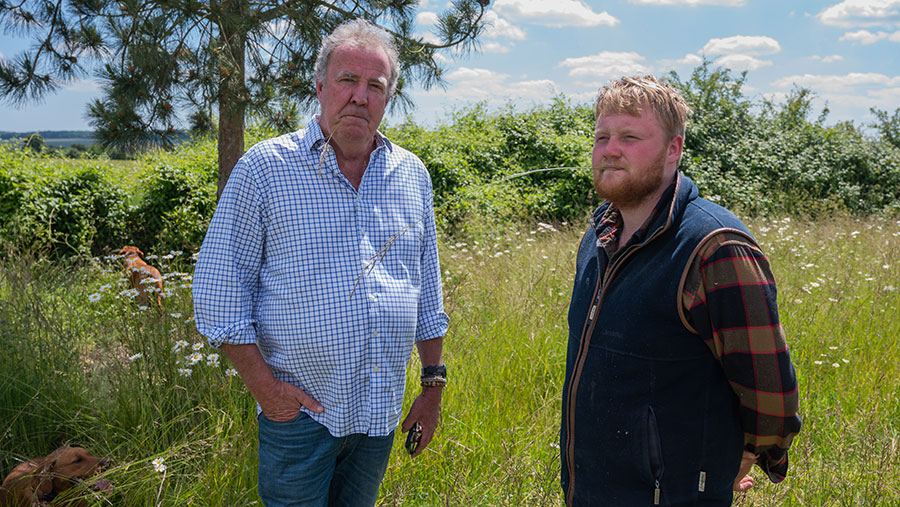
It’s easy to see why. Clarkson arrived at Diddly Squat as the ultimate outsider—a millionaire broadcaster with zero agricultural chops—yet his willingness to fail spectacularly (remember the £5,500 “gay” bull fiasco?) has endeared him to a nation grappling with food security and rural decline. The show’s not just entertainment; it’s advocacy, spotlighting issues like post-Brexit subsidies, climate woes, and the mental health toll on farmers (suicide rates in the sector are three times the national average). Clarkson, ever the provocateur, uses his platform to rant against “bean-counting bureaucrats” while celebrating the unsung heroes like Kaleb, whose viral moments have turned him into a household name.
As for that sixth season? Clarkson left it tantalizingly vague in May, but his latest words tilt toward yes. “I’d do a sixth if there was a reason… like a bloody good story,” he told The Times. With Diddly Squat’s dramas showing no sign of slowing—rumors swirl of a potential glamping venture or badger-proof fencing saga—the stories are there. And after a break to recharge (Clarkson joked about “sitting in a deckchair with a G&T, plotting my next disaster”), the cameras will likely return.
For now, fans can revisit seasons one through four on Prime Video, where Clarkson’s transformation from rev-head to hay-baler’s worst nightmare continues to delight. “I thought it’d be gentle disappointment for the Top Gear crowd,” he admitted earlier this year. “Why watch a bucolic show about farming?” Turns out, 10 million households worldwide had the answer: because in Jeremy Clarkson’s world, even a tractor breakdown is a blockbuster.
As the Cotswolds mist rolls in and Kaleb fires up the John Deere, one thing’s clear: Diddly Squat isn’t done digging yet. The show goes on—and so does the laughter, the losses, and the love for this unlikely farming family.