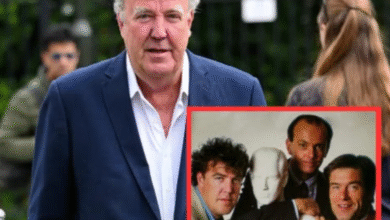
Jeremy Clarkson Fires Back with Four-Word Response to ‘Useless Farmer’ Insult: What Did He Say?
Jeremy Clarkson Fires Back with Four-Word Retort to “Useless Farmer” Jab Amid MP Ambitions
Jeremy Clarkson, the outspoken former Top Gear presenter turned farmer, has never been one to shy away from a verbal sparring match. At 65, the host of Clarkson’s Farm on Amazon Prime Video found himself at the center of a social media storm when a user branded him a “useless farmer.” The comment, posted on X, was a jab at his agricultural endeavors at Diddly Squat Farm, his 1,000-acre estate in the rolling hills of the Cotswolds. Clarkson’s swift and succinct response—”I’m actually getting better”—encapsulated his characteristic blend of defiance and humor, signaling that the television personality is far from conceding defeat, whether in farming or in the court of public opinion.
The controversy unfolded against the backdrop of a challenging year for Clarkson and his farm, which has become a cultural touchstone through the wildly popular Clarkson’s Farm series. Since its debut in 2021, the show has chronicled Clarkson’s transition from motoring journalism to the gritty realities of British agriculture, offering viewers an unfiltered look at the trials of running a modern farm. This year, Diddly Squat faced significant setbacks, including an outbreak of bovine tuberculosis that devastated his cattle herd and a grueling harvest season exacerbated by relentless summer heatwaves. These challenges, far from deterring Clarkson, have only fueled his determination to prove his critics wrong, both on the farm and, potentially, in a new arena: politics.
The “useless farmer” remark emerged from a lively exchange on X, sparked by Clarkson’s recent hints at a surprising career pivot. Earlier this month, he posted a provocative message to the residents of Doncaster North, his birthplace: “People of Doncaster North. Are you happy with your MP? Would you like it if someone from your neck of the woods kicked him out?” The post targeted Ed Miliband, the current Energy Secretary and long-serving MP for the constituency since 2005. Clarkson’s cryptic challenge ignited speculation about his political ambitions, with some fans enthusiastically endorsing the idea of him running for Parliament.

One supporter wrote on X, “Actually, I would quite like Jeremy Clarkson to stand against Miliband, take his seat, then do a Netflix series exposing the corruption, mediocrity and incompetence of Westminster. Clarkson’s Parliament would be a winner.” The suggestion of a political docuseries in the vein of Clarkson’s Farm captured the imagination of many, blending his knack for entertainment with his penchant for stirring the pot. However, not everyone was convinced. A detractor fired back, “He’d be f**king useless as an MP,” while another piled on, claiming, “He’s useless as a farmer. That’s the point.” It was this latter comment that prompted Clarkson’s four-word rebuttal, a concise defense of his growing competence as a farmer despite the steep learning curve.
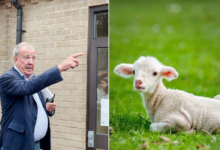
Clarkson’s journey at Diddly Squat has been anything but smooth. The Clarkson’s Farm series has laid bare the complexities of agriculture, from navigating bureaucratic red tape to battling unpredictable weather and disease. The bovine tuberculosis outbreak, a devastating blow to any livestock farmer, forced Clarkson to confront the emotional and financial toll of losing animals. Meanwhile, the summer’s heatwaves, among the most intense in recent memory, made harvesting crops a logistical nightmare. Yet, through it all, Clarkson has leaned into the challenge, guided by his team, including fan-favorite farmhand Kaleb Cooper, and supported by a growing legion of viewers who admire his tenacity.
The idea of Clarkson as a political contender is not entirely new. As Ed Miliband noted during an appearance on Sky News’ Sunday Morning with Trevor Phillips, Clarkson previously floated the idea of contesting the Doncaster North seat back in 2013. Miliband, unfazed by the renewed challenge, responded with measured diplomacy: “I think he is a sort of long-standing aspirant to my seat. It’s for other people to decide if they want to stand for Parliament, including in my seat. I welcome all comers. Let’s see what happens.” His calm demeanor belied the buzz surrounding Clarkson’s potential candidacy, which has sent bookmakers into a frenzy.

According to Coral bookmakers, Clarkson is now odds-on at 2/1 to win a parliamentary seat at the next general election, a remarkable shift driven by a surge in bets following his X post. More audaciously, odds of 250/1 have been placed on him one day ascending to the role of Prime Minister, a prospect that seems as improbable as it is intriguing. Clarkson’s larger-than-life persona, honed over decades on shows like Top Gear and The Grand Tour, and now as the host of Who Wants To Be A Millionaire?, makes him a formidable figure in the public eye. His ability to connect with audiences through humor, candor, and a touch of controversy could translate into a unique political campaign, should he choose to pursue it.
The notion of “Clarkson’s Parliament,” as envisioned by his supporter, taps into a broader sentiment of frustration with the political establishment. Clarkson’s brand of outspokenness, often laced with irreverence, resonates with those disillusioned by conventional politics. His farming journey has already positioned him as a vocal advocate for British farmers, railing against policies that he believes stifle rural communities. Issues like agricultural subsidies, environmental regulations, and the economic pressures on small farms have been central themes in Clarkson’s Farm, and they could form the backbone of a political platform if he decides to run.
Yet, the criticism of Clarkson as a “useless farmer” reflects a skepticism that he must contend with, both in agriculture and in any potential political bid. Farming is an unforgiving profession, and Clarkson’s initial forays were marked by missteps—chronicled with self-deprecating humor on the show—that critics point to as evidence of his inexperience. However, his response, “I’m actually getting better,” suggests a willingness to learn and adapt, qualities that have endeared him to fans. The series has documented his progress, from mastering tractor operations to experimenting with innovative crops and livestock ventures, all while grappling with the harsh realities of the industry. His partnership with experts like Kaleb Cooper and land agent Charlie Ireland has been instrumental in this growth, turning Diddly Squat into a functioning, if unconventional, farm.

The political speculation adds another layer to Clarkson’s multifaceted career. Born in Doncaster, he has deep roots in the region, which could lend authenticity to a campaign against Miliband, a seasoned politician with a national profile. Miliband’s role as Energy Secretary places him at the heart of debates over net-zero policies, which have sparked contention among farmers, including Clarkson, who has criticized government regulations as overly restrictive. A Clarkson-Miliband showdown would pit two contrasting figures against each other: the career politician versus the celebrity outsider, each with their own vision for the future.
As Clarkson’s Farm prepares for its fifth season, with filming recently wrapped at Diddly Squat, the show’s narrative may begin to reflect these broader ambitions. The series has already evolved from a quirky experiment into a platform for discussing serious issues, and Clarkson’s political flirtations could provide fresh fodder for its storytelling. Whether he’s debating crop yields with Cooper or challenging Westminster’s status quo, Clarkson’s knack for turning adversity into entertainment remains his greatest asset.
For now, Clarkson’s four-word retort stands as a testament to his resilience. The “useless farmer” label may sting, but it’s a challenge he’s met head-on, just as he’s tackled bovine TB, scorching summers, and the prospect of a parliamentary run. Whether he’s driving a tractor or a political campaign, Clarkson is proving that he’s far from useless—and, as he claims, only getting better.